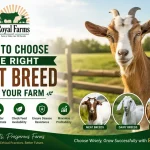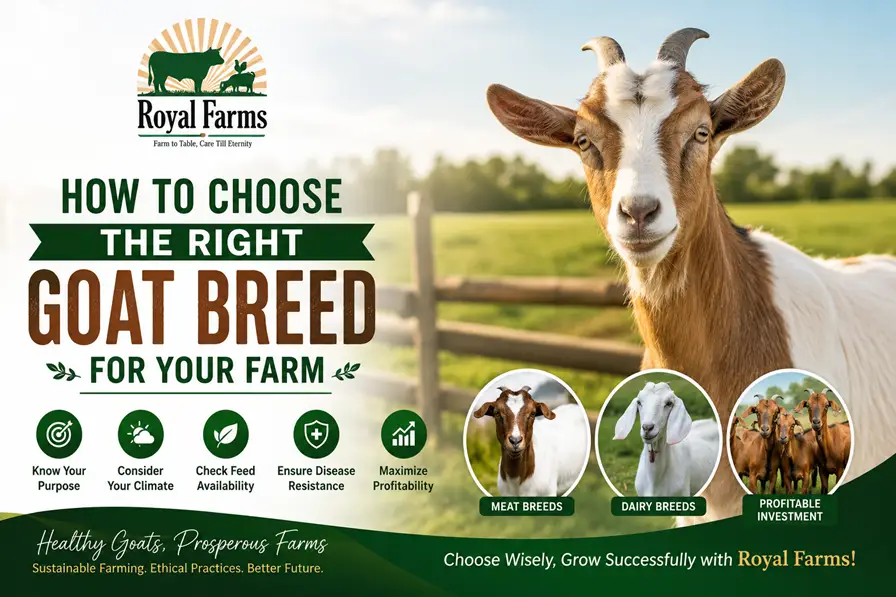
Goat farming has become one of the fastest-growing agricultural businesses in India. With increasing demand for goat meat, milk, and breeding stock, many farmers are investing in commercial goat farming to generate a steady income. However, the success of your farm depends largely on one crucial decision—choosing the right goat breed.
Different goat breeds have unique characteristics, growth rates, milk production capacity, disease resistance, and adaptability to climate. Selecting the wrong breed can lead to poor productivity, higher maintenance costs, and lower profits.
At Royal Farms, we believe that selecting the right breed is the foundation of a successful and sustainable goat farming business. This guide will help you understand the factors to consider before choosing a goat breed and introduce some of the best breeds for Indian farming conditions.
Must Read: The Benefits of Using Natural Feed in Animal Farming
Why Choosing the Right Goat Breed Matters
Table of Contents
ToggleThe breed you select directly impacts the profitability and efficiency of your farm. A well-suited breed offers several benefits, including:
- Higher meat or milk production
- Better adaptability to local climate
- Improved disease resistance
- Lower maintenance costs
- Faster growth and breeding performance
- Increased return on investment
By matching the breed to your farming goals, you can build a productive and profitable goat farming business.
Also Read: Common Problems in Goat Farming and Their Solutions
Identify Your Farming Purpose
Before purchasing goats, determine your primary farming objective.
Meat Production
If your goal is commercial meat production, choose breeds known for rapid growth, higher body weight, and excellent meat quality.
Popular meat breeds include:
- Boer Goat
- Sirohi Goat
- Beetal Goat
- Black Bengal Goat
- Osmanabadi Goat
Dairy Farming
For milk production, select breeds with high milk yield and good lactation performance.
Popular dairy breeds include:
- Jamunapari
- Beetal
- Barbari
- Jakhrana
These breeds provide nutritious milk and can generate additional income through dairy sales.
Breeding Business
Many farmers earn income by selling healthy breeding goats. In this case, select breeds with:
- High fertility
- Good kidding rate
- Strong genetics
- Healthy offspring
Consider Your Local Climate
Climate plays a significant role in goat farming success.
Different breeds perform better under different environmental conditions.
Hot and Dry Regions
Ideal breeds include:
- Sirohi
- Marwari
- Osmanabadi
These breeds tolerate heat and require relatively low maintenance.
Humid Regions
Suitable breeds include:
- Beetal
- Black Bengal
These goats adapt well to humid conditions while maintaining good productivity.
Cold Regions
For cooler climates, choose breeds with thicker coats and better cold tolerance.
Consult local livestock experts before purchasing goats for mountainous regions.
Evaluate Available Farm Space
The size of your farm influences breed selection.
Large breeds require:
- More grazing land
- Larger shelters
- Increased feed consumption
Smaller breeds are ideal for:
- Small farms
- Backyard farming
- Limited grazing areas
Efficient space management improves animal health and reduces operational costs.
Check Feed Availability
Feed accounts for a major portion of goat farming expenses.
Before selecting a breed, assess whether your farm can provide:
- Green fodder
- Dry fodder
- Concentrate feed
- Clean drinking water
Some breeds require richer nutrition, while indigenous breeds often thrive on locally available feed resources.
Disease Resistance Matters
Healthy goats result in lower veterinary expenses and higher productivity.
Choose breeds known for:
- Strong immunity
- Disease resistance
- Better survival rates
Regular vaccination, proper hygiene, and quality nutrition further improve herd health.
Understand Breeding Performance
A profitable goat farm depends on consistent reproduction.
Look for breeds with:
- Early maturity
- High kidding rate
- Healthy twins
- Strong maternal instincts
Good breeding performance increases herd size and long-term profitability.
Best Goat Breeds in India
1. Boer Goat
Originally developed in South Africa, Boer goats are famous for commercial meat production.
Advantages:
- Rapid growth
- High body weight
- Excellent meat quality
- Premium market value
Best for:
Commercial meat farming.
2. Sirohi Goat
Native to Rajasthan, the Sirohi goat is one of India’s most popular commercial breeds.
Benefits include:
- Heat tolerance
- Disease resistance
- Low maintenance
- Good weight gain
Suitable for beginners and experienced farmers alike.
3. Jamunapari Goat
Jamunapari goats are known for their impressive size and milk production.
Features:
- High milk yield
- Large body frame
- Good breeding ability
Ideal for dual-purpose farming.
4. Beetal Goat
Beetal goats are valued for both milk and meat production.
Advantages:
- High productivity
- Fast growth
- Good adaptability
- Excellent breeding performance
5. Black Bengal Goat
This breed is widely appreciated for premium-quality meat and high fertility.
Benefits:
- Excellent meat quality
- High kidding rate
- Suitable for small farms
- Lower feed requirements
Budget Planning Before Buying Goats
Estimate your total investment, including:
- Goat purchase
- Housing construction
- Feed expenses
- Veterinary care
- Labour costs
- Water facilities
- Insurance (if applicable)
Proper financial planning ensures smooth farm operations.
Buy Goats from Trusted Farms
Always purchase goats from reputable breeders or established farms.
Healthy goats should have:
- Bright eyes
- Clean skin
- Healthy coat
- Active movement
- Proper vaccination records
- Good body condition
Avoid buying unhealthy animals simply because they are cheaper.
Sustainable Goat Farming Practices
Modern farming focuses on sustainability and animal welfare.
Best practices include:
- Providing balanced nutrition
- Maintaining clean shelters
- Ensuring adequate ventilation
- Practicing rotational grazing
- Using preventive healthcare
- Maintaining breeding records
- Reducing environmental impact
Sustainable practices improve productivity while protecting natural resources.
Also Read: Goat Farming Business: Complete Guide for Beginners
Why Farmers Trust Royal Farms
At Royal Farms, we are committed to ethical livestock farming and sustainable agricultural practices. Our experienced team focuses on raising healthy goats through proper nutrition, scientific breeding, and responsible animal care.
Whether you are starting a new goat farming business or expanding an existing farm, Royal Farms provides reliable guidance to help farmers make informed decisions and build profitable livestock enterprises.
Conclusion
Choosing the right goat breed is one of the most important decisions for any farmer. Factors such as farming objectives, climate, feed availability, disease resistance, and budget all influence long-term success. By selecting a breed that matches your goals and following sustainable farming practices, you can maximize productivity and profitability.
If you’re planning to start or expand your goat farming business, partnering with experienced professionals like Royal Farms can help you achieve long-term success through ethical farming, expert guidance, and quality livestock management.
Also Read: Goat Health Problems in India: Prevention Tips
Frequently Asked Questions
1. Which goat breed is best for commercial farming in India?
Sirohi, Boer, Beetal, Jamunapari, and Black Bengal are among the best breeds for commercial goat farming in India.
2. Which goat breed grows the fastest?
The Boer goat is widely recognized for its rapid growth and superior meat production.
3. Which goat breed is best for milk production?
Jamunapari and Beetal goats are excellent choices for dairy farming due to their high milk yield.
4. Is goat farming profitable in India?
Yes. With proper breed selection, nutrition, healthcare, and management, goat farming can be a highly profitable agricultural business.
5. How can beginners choose the right goat breed?
Beginners should consider their farming goals, local climate, available space, budget, and market demand before selecting a breed.