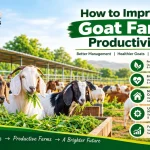
Goat farming is an important part of the livestock industry in India, offering opportunities for farmers and commercial livestock businesses. Goats are valued for their adaptability, relatively flexible feeding requirements, and ability to thrive in different climatic conditions. However, running a successful goat farm requires more than simply raising animals. Proper planning, balanced nutrition, breeding management, disease prevention, and regular monitoring are essential for maintaining a healthy and productive herd.
For farmers looking to improve their operations, effective goat farm management can help reduce avoidable losses, support healthy animal growth, and improve overall farm efficiency. By following suitable management practices and making informed decisions, goat farmers can build a more organized and sustainable farming operation.
1. Choose the Right Goat Breed for Your Farm
Table of Contents
ToggleBreed selection is one of the first decisions that can influence goat farm productivity. Different goat breeds have different characteristics related to growth, milk production, reproduction, climate adaptability, and meat quality.
Before selecting a breed, farmers should consider their primary farming objective. For example, a farm focused on meat production may require breeds known for suitable growth and body development, while a dairy-oriented operation should prioritize milk production and udder health.
Farmers should also evaluate local climatic conditions, feed availability, veterinary support, and market demand before choosing a breed. Goats that are well adapted to the local environment may require fewer adjustments to housing and management practices.
Purchasing healthy animals from reliable sources and checking their health history can also help establish a stronger foundation for the herd.
2. Provide Balanced Nutrition and Clean Drinking Water
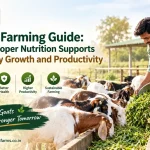
Nutrition plays a central role in improving goat farm productivity. Goats require a balanced diet containing energy, protein, fibre, minerals, and vitamins to support growth, reproduction, immunity, and general health.
A suitable feeding program may include green fodder, dry roughage, locally available forage, and supplementary feed where necessary. The exact diet should depend on the animal’s age, body condition, reproductive status, production purpose, and the quality of available feed.
Pregnant and lactating goats, growing kids, and breeding males may have different nutritional requirements. Therefore, providing the same quantity and type of feed to every animal may not be appropriate.
Farmers should also ensure that clean drinking water is available throughout the day. Water intake is particularly important during hot weather and periods of increased nutritional demand.
Regularly checking feed quality, storing feed properly, and avoiding sudden dietary changes can support better digestion and reduce feeding-related problems. Consulting a qualified veterinarian or animal nutritionist can help develop an appropriate feeding plan.
3. Maintain Clean, Comfortable and Well-Ventilated Housing
Proper housing protects goats from extreme weather, excessive moisture, poor sanitation, and other environmental stressors. A clean and comfortable shelter can support animal welfare and help reduce the risk of certain health problems.
Goat housing should provide adequate space for movement, resting, feeding, and social interaction. Good ventilation helps remove excess moisture and unpleasant gases while maintaining suitable indoor conditions. At the same time, the shelter should protect animals from heavy rain, harsh sunlight, and strong winds.
Farmers should clean feeding and watering equipment regularly and remove accumulated manure and wet bedding. Floors should be designed to reduce slipping and allow appropriate drainage.
Overcrowding should be avoided because it can increase competition for feed and water, create stress, and make disease management more difficult. Separating animals according to age, size, reproductive status, or health needs can also improve day-to-day farm management.
4. Follow Effective Breeding Management Practices
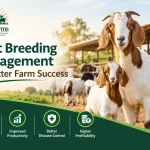
A well-planned breeding program helps farmers manage herd development and maintain consistent production. Breeding decisions should be based on animal health, reproductive fitness, desirable characteristics, and the farm’s long-term objectives.
Healthy breeding males and females should be selected carefully. Farmers should avoid breeding animals with serious inherited defects and maintain records of mating dates, kidding dates, birth outcomes, and offspring performance.
Monitoring reproductive cycles and identifying suitable breeding periods can improve breeding management. Pregnant goats should receive appropriate nutrition, comfortable housing, and regular health monitoring.
After kidding, newborn kids need particular attention. Ensuring that kids receive colostrum promptly after birth is important because it supplies antibodies that help support their early immune protection. Farmers should monitor feeding, warmth, growth, and general activity during the early stages of life.
Maintaining breeding records also helps identify productive animals and make informed decisions about future herd replacements.
5. Prioritize Preventive Healthcare and Disease Control
Preventive healthcare is an essential part of productive goat farming. Illness can affect appetite, weight gain, reproduction, and overall herd performance. Some health problems may also spread quickly when animals are kept in crowded or poorly maintained conditions.
Farmers should arrange regular veterinary checkups and follow a locally appropriate vaccination and parasite-control program recommended by a qualified veterinarian.
Daily observation is equally important. Changes in appetite, behaviour, movement, breathing, stool consistency, or body condition may indicate a health problem. Animals showing signs of illness should be assessed promptly, and separation may be necessary to reduce the risk of transmission.
Newly purchased goats should be managed according to veterinary quarantine recommendations before being introduced to the existing herd. Farm equipment, feeding areas, and water containers should also be kept clean.
Keeping treatment records, vaccination details, and veterinary recommendations helps farmers monitor herd health and make timely decisions.
6. Manage Kids Properly to Improve Survival and Growth
Kid management has a direct influence on the future productivity of a goat farm. Young goats need appropriate nutrition, a clean environment, and close observation during their early development.
Immediately after birth, farmers should ensure that the kid is breathing normally, is warm, and receives adequate colostrum. The navel should be managed hygienically according to veterinary guidance.
As kids grow, they should gradually become accustomed to suitable solid feed and clean water while continuing to receive age-appropriate milk nutrition. Any changes in feeding should be introduced carefully.
Regularly monitoring body weight and growth can help identify animals that are not developing as expected. Kids with poor appetite, diarrhoea, weakness, or delayed growth should receive prompt attention.
Good early-life management supports healthier herd development and helps farmers identify animals that may require additional care.
7. Maintain Accurate Farm Records
Recordkeeping is an often-overlooked part of goat farm management. Without reliable records, it can be difficult to understand why productivity improves or declines over time.
Farmers should maintain records of:
- Number of goats, births, deaths, and herd replacements.
- Feed purchases, daily feeding practices, and major input costs.
- Breeding dates, kidding outcomes, and reproductive performance.
- Vaccinations, veterinary visits, treatments, and health incidents.
- Animal growth, body condition, and production performance.
- Sales, operating expenses, and overall farm income.
These records help farmers identify recurring problems, compare performance across different periods, and plan future expenses. They can also highlight opportunities to improve feeding efficiency, reduce preventable losses, and manage farm resources more effectively.
8. Improve Farm Hygiene and Biosecurity
Good hygiene helps create a healthier environment for goats and supports more consistent farm operations. A practical biosecurity plan should focus on reducing opportunities for infectious diseases to enter or spread within the herd.
Farmers should clean housing regularly, prevent feed contamination, provide safe drinking water, and dispose of animal waste appropriately. Visitors, vehicles, and shared equipment should be managed carefully where disease risks exist.
New animals should undergo appropriate health checks and quarantine procedures. Sick animals should receive veterinary attention, and farm workers should follow basic hygiene practices when handling different groups of animals.
Biosecurity measures should be practical enough to follow consistently. Regular inspections can help identify sanitation problems before they become more difficult to manage.
9. Plan Feed Resources and Control Operating Costs
Feed availability and operating expenses can strongly influence the financial performance of a goat farm. Farmers should plan their feed requirements according to herd size, seasonal conditions, and the nutritional needs of different animal groups.
Growing suitable fodder, using locally available feed resources safely, and storing dry feed properly may help improve resource management. However, lower feed costs should never come at the expense of adequate nutrition.
Farmers should review major expenses, including feed, labour, veterinary care, housing maintenance, and animal purchases. Comparing these expenses with herd growth, survival, reproduction, and sales performance can help identify areas where management changes may be beneficial.
Before expanding the farm, it is important to evaluate available space, feed resources, labour, veterinary support, and market demand. Expansion should be based on realistic planning rather than assumptions about guaranteed returns.
10. Adopt a Consistent Farm Management Routine
Successful goat farming depends on the consistent application of good management practices. Farmers can establish a daily routine that includes checking animal health, providing feed and water, inspecting housing, and observing animal behaviour.
Weekly or monthly reviews can cover body condition, growth records, breeding performance, feed stocks, sanitation, and expenses. These reviews help farmers identify issues early and evaluate whether management practices are working effectively.
Where appropriate, digital recordkeeping tools and farm management systems can make it easier to organize information and monitor trends. However, technology should complement sound animal husbandry rather than replace regular observation and veterinary care.
Conclusion
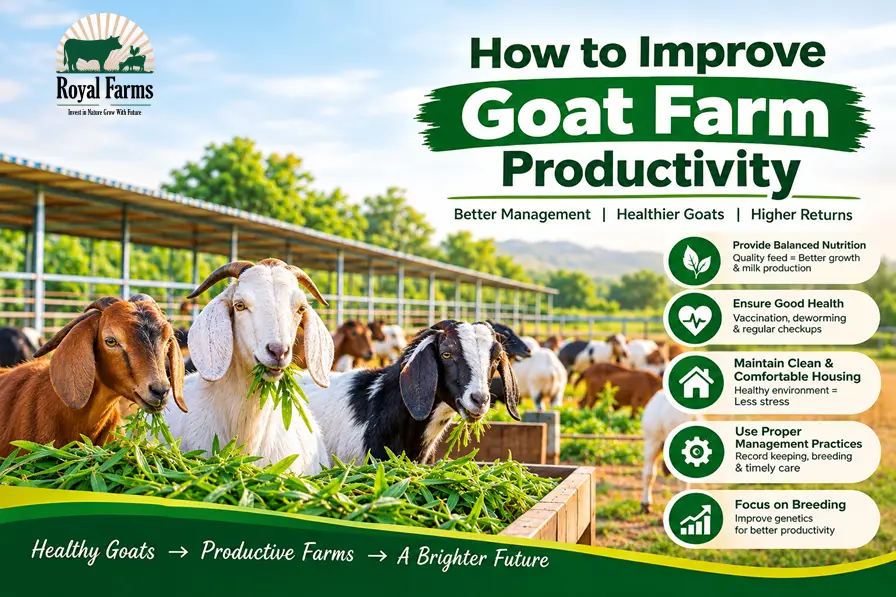
Improving goat farm productivity requires a balanced approach that combines proper nutrition, suitable housing, effective breeding, preventive healthcare, kid management, and accurate recordkeeping. Each of these practices contributes to animal welfare, farm efficiency, and informed decision-making.
For commercial farmers, the key is to establish practical management systems that can be maintained consistently as the herd grows. Regularly reviewing animal health, feed resources, operating costs, and production records helps identify opportunities for improvement.
At Royal Farms, a focus on organized livestock management and responsible farming practices can help farmers better understand the essential elements of goat farming. With careful planning, appropriate professional guidance, and consistent attention to herd needs, goat farmers can work toward a healthier, more efficient, and more sustainable farming operation.