
Running a successful dairy farm is about much more than simply feeding cows and collecting milk. Following the right Daily Management Tips for Dairy Cattle Farms is essential for maintaining healthy cattle, improving milk production, reducing veterinary expenses, and ensuring long-term profitability. Whether you own a small dairy farm or manage a large commercial cattle operation, implementing effective dairy farm management practices, proper cattle nutrition, regular health monitoring, and hygienic milking routines can significantly improve your farm’s performance. By adopting these daily management tips for dairy cattle farms, farmers can enhance animal welfare, increase productivity, and build a sustainable and profitable dairy farming business.
This guide shares practical daily management tips that can help improve cattle health, maximize milk yield, and increase the overall productivity of your dairy farm.
Also Read: Cattle Farming in Bengaluru Karnataka
1. Start Every Day with a Health Inspection
The first task each morning should be a complete visual inspection of every animal.
Look for signs such as:
- Loss of appetite
- Swollen udders
- Limping
- Nasal discharge
- Excessive coughing
- Changes in behavior
- Reduced milk production
Detecting health issues early prevents disease outbreaks and minimizes treatment costs. Healthy cattle remain active, alert, and maintain consistent feeding habits.
2. Maintain a Consistent Feeding Schedule
Proper nutrition is the foundation of successful dairy farming.
A balanced diet should include:
- Green fodder
- Dry fodder
- Concentrated feed
- Mineral mixture
- Clean drinking water
Feeding cattle at the same time every day improves digestion and reduces stress. Lactating cows require additional nutrients to maintain high milk production.
Avoid sudden dietary changes, as they may reduce milk yield and negatively affect rumen health.
3. Provide Unlimited Access to Clean Water
Water is often overlooked but is one of the most important nutrients for dairy cattle.
A high-producing dairy cow may consume over 70–100 liters of water per day depending on weather conditions and milk production.
Ensure:
- Fresh water is available 24/7
- Water troughs are cleaned daily
- No stagnant water remains in feeding areas
Hydrated cattle produce more milk and recover faster from stress.
4. Keep the Dairy Shed Clean
A clean environment reduces the risk of bacterial infections and improves animal comfort.
Daily cleaning should include:
- Removing manure
- Replacing wet bedding
- Washing feeding equipment
- Cleaning water containers
- Disinfecting milking areas
Good hygiene also improves milk quality by reducing bacterial contamination.
5. Follow Proper Milking Procedures
Milking should be performed at the same times every day.
Before milking:
- Wash the udder
- Dry using a clean towel
- Check for signs of mastitis
After milking:
- Apply teat disinfectant
- Clean milking equipment thoroughly
Maintaining hygiene during milking protects udder health and improves milk quality.
6. Monitor Feed Intake Daily
Every cow should consume enough feed according to her production stage.
If a cow suddenly reduces feed intake, it may indicate:
- Digestive problems
- Fever
- Pregnancy complications
- Mineral deficiencies
- Infection
Monitoring feed consumption helps identify health problems before visible symptoms appear.
7. Reduce Heat Stress
Indian summers can significantly affect dairy cattle productivity.
To keep cattle comfortable:
- Provide shade
- Install proper ventilation
- Use fans or sprinklers
- Offer cool drinking water
- Avoid heavy activity during peak afternoon temperatures
Reducing heat stress helps maintain milk production during summer months.
8. Practice Preventive Healthcare
Daily management should include preventive health practices rather than waiting for diseases to occur.
Essential activities include:
- Vaccination as recommended
- Deworming schedule
- Parasite control
- Hoof inspection
- Veterinary checkups
Preventive care reduces mortality and improves long-term productivity.
9. Maintain Comfortable Housing
Comfortable cattle produce better-quality milk.
An ideal dairy shed should provide:
- Proper ventilation
- Dry flooring
- Adequate drainage
- Comfortable resting areas
- Sufficient space for movement
Stress-free animals remain healthier and are more productive.
10. Observe Animal Behavior
Behavior changes often indicate health problems.
Watch for:
- Isolation from the herd
- Reduced chewing
- Aggressive behavior
- Standing for long periods
- Difficulty walking
Early behavioral observations help prevent serious illnesses.
11. Record Daily Farm Activities
Successful dairy farmers maintain accurate records.
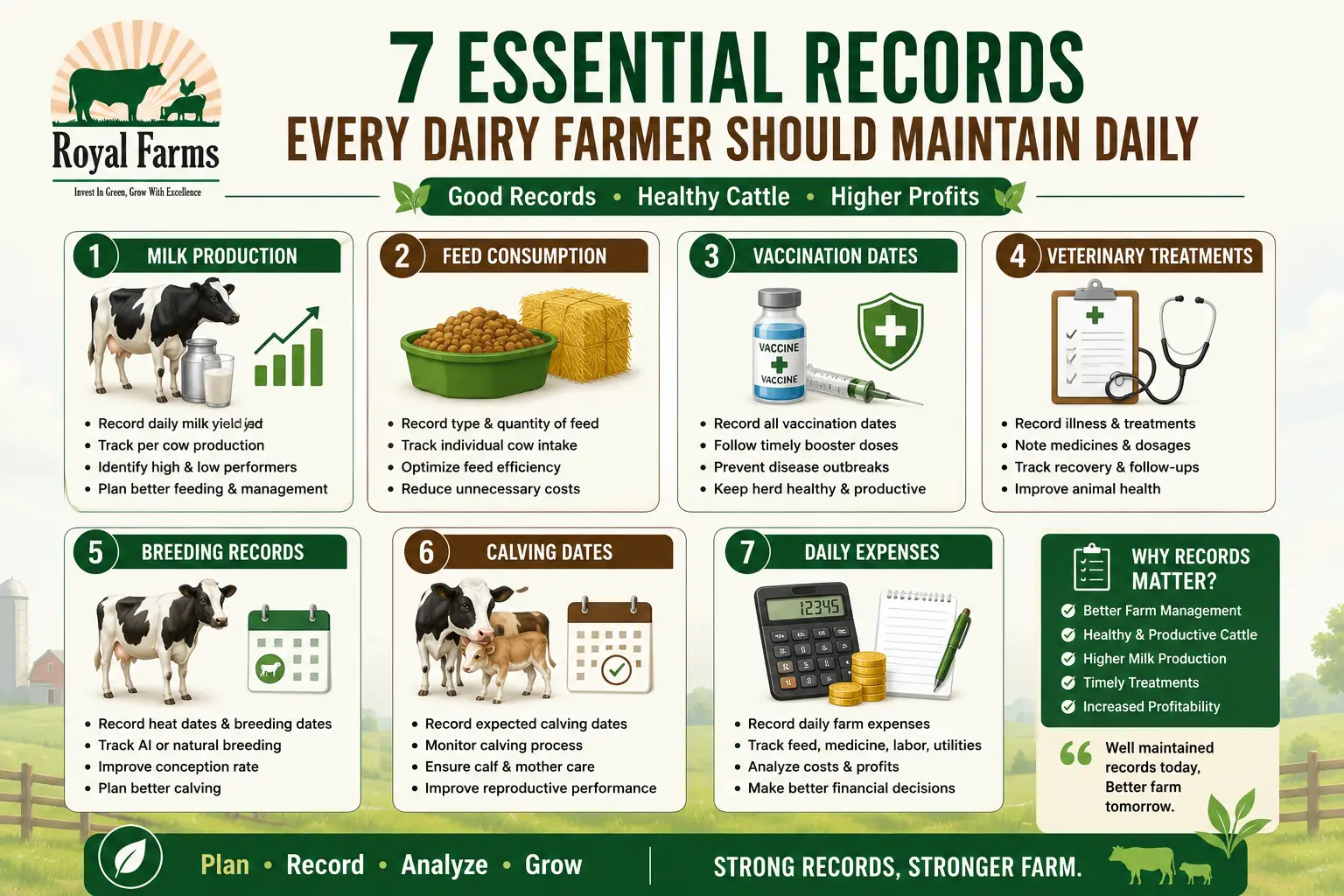
Good record-keeping helps improve farm planning and profitability.
12. Maintain Proper Biosecurity
Visitors, vehicles, and new animals can introduce diseases.
Daily biosecurity measures include:
- Restrict unnecessary visitors
- Disinfect footwear
- Isolate sick animals
- Quarantine newly purchased cattle
- Clean equipment regularly
Strong biosecurity protects the entire herd.
13. Focus on Animal Welfare
Ethical cattle management leads to healthier animals and higher productivity.
Good welfare practices include:
- Gentle handling
- Comfortable resting areas
- Stress-free transportation
- Regular grooming
- Balanced nutrition
Royal Farms follows ethical livestock farming principles that prioritize both animal welfare and sustainable farm operations.
14. Train Farm Workers
Even the best farm infrastructure cannot replace skilled workers.
Employees should understand:
- Proper feeding techniques
- Milking hygiene
- Disease identification
- Animal handling
- Emergency response procedures
Regular training improves farm efficiency and reduces costly mistakes.
15. Use Modern Farm Management Practices
Technology is transforming dairy farming across India.
Modern dairy farms increasingly use:
- Automatic milking systems
- Digital herd management software
- Health monitoring devices
- Feed management systems
- Milk production tracking
Professional management and technology can improve efficiency, animal health, and long-term returns.
Common Daily Mistakes to Avoid
Many dairy farmers unintentionally reduce productivity by making avoidable mistakes such as:
- Inconsistent feeding schedules
- Poor hygiene in milking areas
- Delayed disease treatment
- Overcrowded housing
- Inadequate ventilation
- Poor-quality feed
- Lack of health records
- Ignoring early symptoms of illness
Avoiding these mistakes helps improve herd performance and profitability.
Why Daily Management Matters
Daily management is the backbone of every successful dairy farm. Healthy cattle, proper nutrition, clean housing, and consistent routines directly influence milk production, breeding success, and farm income.
At Royal Farms, professionally managed livestock operations focus on ethical animal care, balanced nutrition, transparent management, and sustainable farming practices. This integrated approach supports healthier cattle, improved productivity, and long-term value for farmers and investors alike.
Conclusion
Successful dairy farming is built on consistent daily care rather than occasional interventions. By following a structured routine that includes proper feeding, clean housing, regular health monitoring, hygienic milking practices, and preventive healthcare, dairy farmers can improve milk production, reduce disease risks, and increase farm profitability.
Whether you are starting a new dairy farm or expanding an existing one, adopting professional daily management practices will help you build a healthier herd and a more sustainable business. With expert guidance and ethically managed livestock solutions, Royal Farms is committed to supporting modern dairy farming across India through transparency, animal welfare, and long-term growth.