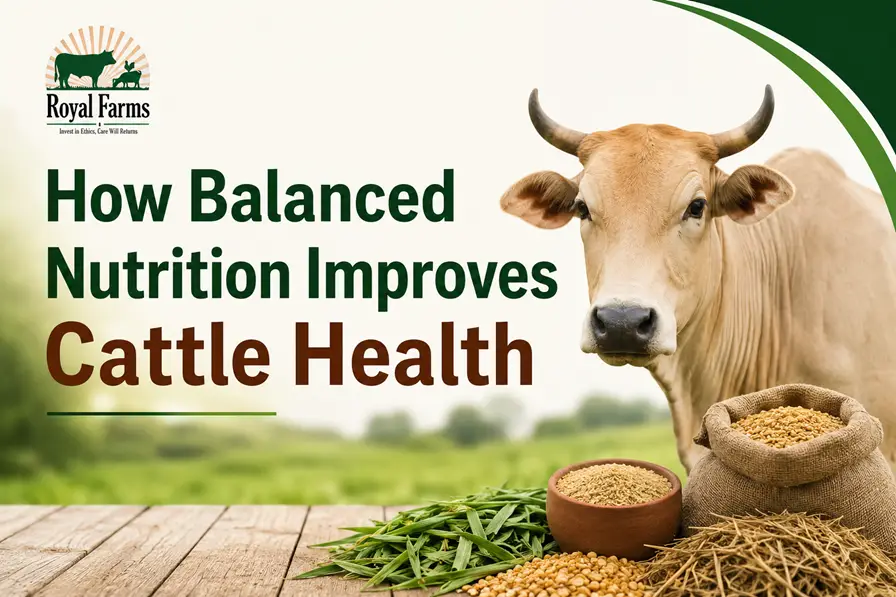
Healthy cattle are the foundation of a successful livestock farming business. Whether you operate a dairy farm or a managed livestock operation, providing balanced nutrition is essential for maintaining animal health, improving productivity, and achieving long-term profitability. Proper feeding not only supports growth and reproduction but also strengthens immunity and reduces the risk of disease.
At Royal Farms, we believe that balanced nutrition is one of the key pillars of successful cattle farming. By combining quality feed, scientific feeding practices, and ethical animal care, we help ensure that cattle remain healthy, productive, and well cared for throughout every stage of life.
What Is Balanced Nutrition for Cattle?
Table of Contents
ToggleBalanced nutrition means providing cattle with the right combination of nutrients in the correct proportions to meet their daily nutritional requirements. Every animal needs a carefully planned diet that includes energy, protein, fiber, vitamins, minerals, and clean water.
The nutritional needs of cattle vary depending on factors such as age, breed, weight, health status, and production stage. For example, growing calves require higher protein levels to support development, while lactating cows need additional energy and minerals to maintain milk production.
Providing a balanced diet ensures that cattle receive everything they need for healthy growth, strong immunity, and consistent performance.
Essential Nutrients for Healthy Cattle
A well-balanced cattle diet should include the following essential nutrients:
1. Energy
Energy is required for daily activities, body maintenance, growth, reproduction, and milk production. Energy-rich feeds such as maize, grains, and high-quality silage help cattle maintain healthy body condition and perform efficiently.
2. Protein
Protein plays an important role in muscle development, tissue repair, and overall growth. Protein-rich feed ingredients such as soybean meal, cottonseed cake, and legume fodder support healthy development in cattle of all ages.
3. Fiber
Fiber is essential for proper digestion and rumen function. Green fodder, hay, and crop residues promote healthy digestion while reducing digestive disorders.
4. Vitamins and Minerals
Minerals such as calcium, phosphorus, magnesium, zinc, and selenium support bone development, immunity, and reproductive health. Vitamins A, D, and E contribute to healthy vision, strong bones, and improved disease resistance.
5. Clean Water
Water is often overlooked but is one of the most important nutrients. Cattle require continuous access to fresh, clean water for digestion, temperature regulation, and overall health.
Benefits of Balanced Nutrition in Cattle Farming
Improved Growth and Weight Gain
Balanced nutrition provides the nutrients required for healthy muscle and bone development. Young calves grow faster, while mature cattle maintain an ideal body condition, leading to higher market value and improved farm profitability.
Better Milk Production
For dairy cattle, proper nutrition directly affects milk yield and quality. A well-balanced diet helps lactating cows produce consistent quantities of nutritious milk while maintaining their health.
Stronger Immune System
Healthy nutrition strengthens the immune system, enabling cattle to resist infections and recover more quickly from illness. Proper vitamin and mineral intake reduces the likelihood of common health problems.
Improved Reproductive Performance
Breeding success depends on good nutrition. Balanced diets support fertility, healthy pregnancies, and stronger calves, helping farmers maintain productive herds over the long term.
Reduced Disease Risk
Nutrient deficiencies can lead to poor growth, digestive issues, weakened immunity, and reproductive disorders. Providing balanced nutrition reduces these risks and lowers veterinary costs.
Better Feed Efficiency
When cattle receive the right nutrients in the proper proportions, they convert feed into body weight or milk more efficiently. This improves productivity while reducing feed waste and overall production costs.
Best Feeding Practices for Healthy Cattle
To maximize the benefits of balanced nutrition, farmers should follow these best practices:
- Provide a combination of green fodder, dry fodder, concentrates, and mineral supplements.
- Ensure clean drinking water is available throughout the day.
- Feed cattle according to their age, weight, and production stage.
- Maintain consistent feeding schedules.
- Store feed properly to prevent contamination and spoilage.
- Monitor body condition regularly and adjust diets when necessary.
- Consult livestock nutrition experts or veterinarians for customized feeding plans.
These practices help maintain healthy animals and improve farm performance.
The Role of Managed Livestock Farming
Modern managed livestock farming emphasizes scientific feeding programs and professional farm management. At Royal Farms, nutrition plans are carefully designed to meet the specific needs of cattle while supporting ethical animal care and sustainable farming practices.
Professional management includes:
- Quality feed selection
- Regular health monitoring
- Nutritional planning
- Clean and hygienic housing
- Veterinary supervision
- Sustainable feeding practices
By integrating these elements, managed livestock farming creates healthier animals and more productive farms.
Why Choose Royal Farms?
Royal Farms is committed to promoting responsible and sustainable livestock farming through professional management and ethical animal care. Our approach focuses on providing balanced nutrition, modern farm management, and high-quality living conditions that support the long-term health and productivity of cattle.
Whether you are interested in cattle farming, poultry farming, or sheep and goat farming, Royal Farms combines industry expertise with sustainable practices to help farmers and investors achieve reliable, long-term success.
Conclusion
Balanced nutrition is one of the most important factors in successful cattle farming. A carefully planned diet improves growth, strengthens immunity, increases milk production, enhances reproductive performance, and reduces disease risk. Combined with proper management and ethical animal care, balanced nutrition creates healthier cattle and more profitable farming operations.
At Royal Farms, we understand that healthy livestock begins with quality nutrition and professional farm management. Our commitment to sustainable farming practices ensures that every animal receives the care and nourishment needed to thrive. If you are looking to build a successful livestock farming venture, Royal Farms offers the expertise and support to help you achieve your goals.
To learn more about our managed livestock farming solutions, visit https://royalfarms.co.in/ and discover how professional cattle management can help you build a healthier and more sustainable future.