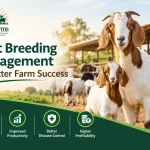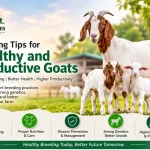
Goat farming can be a productive livestock activity when animals are managed with proper planning, nutrition, healthcare, housing, and breeding practices. However, successful reproduction does not happen by simply selecting breeding goats and allowing them to mate. A systematic approach to goat breeding can help farmers maintain a healthy herd, improve reproductive performance, and support the long-term development of a commercial farm.
Proper goat breeding management involves selecting suitable breeding animals, maintaining their health and nutrition, monitoring reproductive cycles, keeping accurate records, and providing a comfortable environment. When these practices are combined with effective goat farm management, farmers can create better conditions for healthy pregnancies, kidding, and herd growth.
Why Is Proper Goat Breeding Management Important?
Breeding is one of the most important parts of a goat farming operation because reproductive performance directly influences herd growth. Healthy breeding does and bucks can contribute to the production of strong and productive kids.
Poor breeding decisions, inadequate nutrition, disease, stress, overcrowding, and improper management can affect reproductive performance. For this reason, farmers should consider breeding as part of an overall farm management system rather than treating it as a separate activity.
A well-planned breeding program can help farmers:
- Maintain healthy breeding animals
- Improve herd genetics over time
- Monitor reproductive performance
- Plan kidding periods more effectively
- Reduce unnecessary breeding problems
- Maintain better herd records
- Support long-term farm productivity
1. Select Healthy Breeding Goats
The foundation of successful goat breeding is the selection of appropriate breeding animals. Farmers should not select goats based only on appearance or body size. Health, reproductive history, genetic background, physical condition, and overall performance should also be considered.
Breeding does should be healthy, active, and in suitable body condition. Similarly, breeding bucks should be carefully evaluated because a single buck can contribute genetics to multiple offspring.
Important factors to consider include:
- Overall health
- Body condition
- Reproductive history
- Growth performance
- Genetic background
- Physical characteristics
- Disease history
- Previous offspring performance
Selective breeding and proper lineage records can help farmers make more informed decisions when developing their herd.
2. Provide Balanced Nutrition
Nutrition plays an important role in reproductive health. Goats require adequate nutrients to maintain body condition, support normal physiological functions, and perform during different stages of production.
The feeding program should be adjusted according to the animal’s age, health, body condition, and reproductive stage. A suitable diet may include quality forage, green fodder, dry fodder, appropriate concentrates, minerals where required, and clean drinking water.
Breeding animals should receive sufficient nutrition before and during the breeding period. Pregnant does also require appropriate nutritional management throughout pregnancy.
However, feeding programs should be based on the specific needs of the herd. Farmers should consult a qualified veterinarian or animal nutrition professional when developing or changing a feeding program.
3. Maintain Good Goat Farm Management
Effective goat farm management creates an environment where breeding animals can remain healthy and productive. Daily management should include observation of animal behaviour, feeding, water intake, cleanliness, housing conditions, and general health.
A well-managed farm should have:
- Clean and dry housing
- Good ventilation
- Adequate space
- Clean drinking water
- Proper drainage
- Regular cleaning
- Suitable feeding arrangements
- Areas for separating sick animals
- Appropriate kidding facilities
Overcrowding should be avoided because excessive competition and stress can negatively affect animal welfare and overall farm performance.
4. Monitor the Breeding Cycle
Understanding and monitoring reproductive cycles can help farmers plan breeding more effectively. Farmers should observe does for signs associated with heat and maintain records of breeding dates.
Once breeding has taken place, records should be maintained to estimate expected kidding periods and organize appropriate care.
Important information to record includes:
- Doe identification
- Buck identification
- Breeding date
- Observed heat period
- Pregnancy status
- Expected kidding date
- Actual kidding date
- Number of kids born
- Health condition of the doe and kids
Accurate records make it easier to identify reproductive patterns and make better breeding decisions in future cycles.
5. Maintain Proper Health and Hygiene
Healthy animals generally have better opportunities for successful reproduction than animals affected by preventable health problems. Regular health monitoring should therefore be an important part of goat breeding management.
Farmers should maintain appropriate vaccination and parasite-control programs based on veterinary guidance. Sick animals should be identified early and managed appropriately.
Farm hygiene is equally important. Feeding areas, water containers, housing, and kidding areas should be kept clean. Wet or heavily contaminated environments can increase health risks.
New animals should also be introduced carefully, with suitable isolation or quarantine procedures where appropriate.
6. Avoid Unplanned Inbreeding
Maintaining healthy herd genetics requires careful breeding decisions. Repeatedly breeding closely related animals can increase the risk of undesirable genetic outcomes.
Farmers should maintain clear records of parentage and breeding history. These records help prevent unnecessary breeding between closely related animals and support better herd planning.
Introducing suitable unrelated breeding stock when necessary can also help maintain genetic diversity.
7. Give Special Attention to Pregnant Does
Pregnant does require careful management because their nutritional and healthcare needs can change throughout pregnancy.
They should have access to suitable feed, clean water, comfortable housing, and appropriate veterinary care. Stress should be minimized, especially as kidding approaches.
A clean and comfortable kidding area should be prepared in advance. After kidding, both the doe and newborn kids should be monitored closely.
Early attention to abnormal behaviour, weakness, poor appetite, or other health concerns can help farmers respond to potential problems more quickly.
8. Monitor Newborn Kids
The success of a breeding program should not be measured only by pregnancy or kidding rates. The health and development of newborn kids are also important.
Newborn kids should be monitored for feeding, activity, body condition, and general health. Adequate early nutrition and a clean environment are essential for healthy development.
Farmers should also maintain records of birth dates, parentage, sex, health observations, and growth performance. Over time, these records can help identify breeding lines that consistently produce healthy offspring.
9. Keep Detailed Breeding Records
Record keeping is one of the most useful tools in modern commercial goat farming. Without accurate records, it can be difficult to determine which breeding animals are performing well.
A farm record system can include:
- Animal identification
- Date of birth
- Parentage
- Breeding history
- Pregnancy information
- Kidding history
- Number of offspring
- Health records
- Vaccination details
- Growth information
- Offspring performance
These records allow farmers to compare animals and make informed decisions about future breeding and herd replacement.
10. Combine Genetics with Professional Farm Management
Good genetics alone cannot guarantee successful breeding. Breeding performance depends on several factors working together.
Farmers should combine suitable breeding stock with:
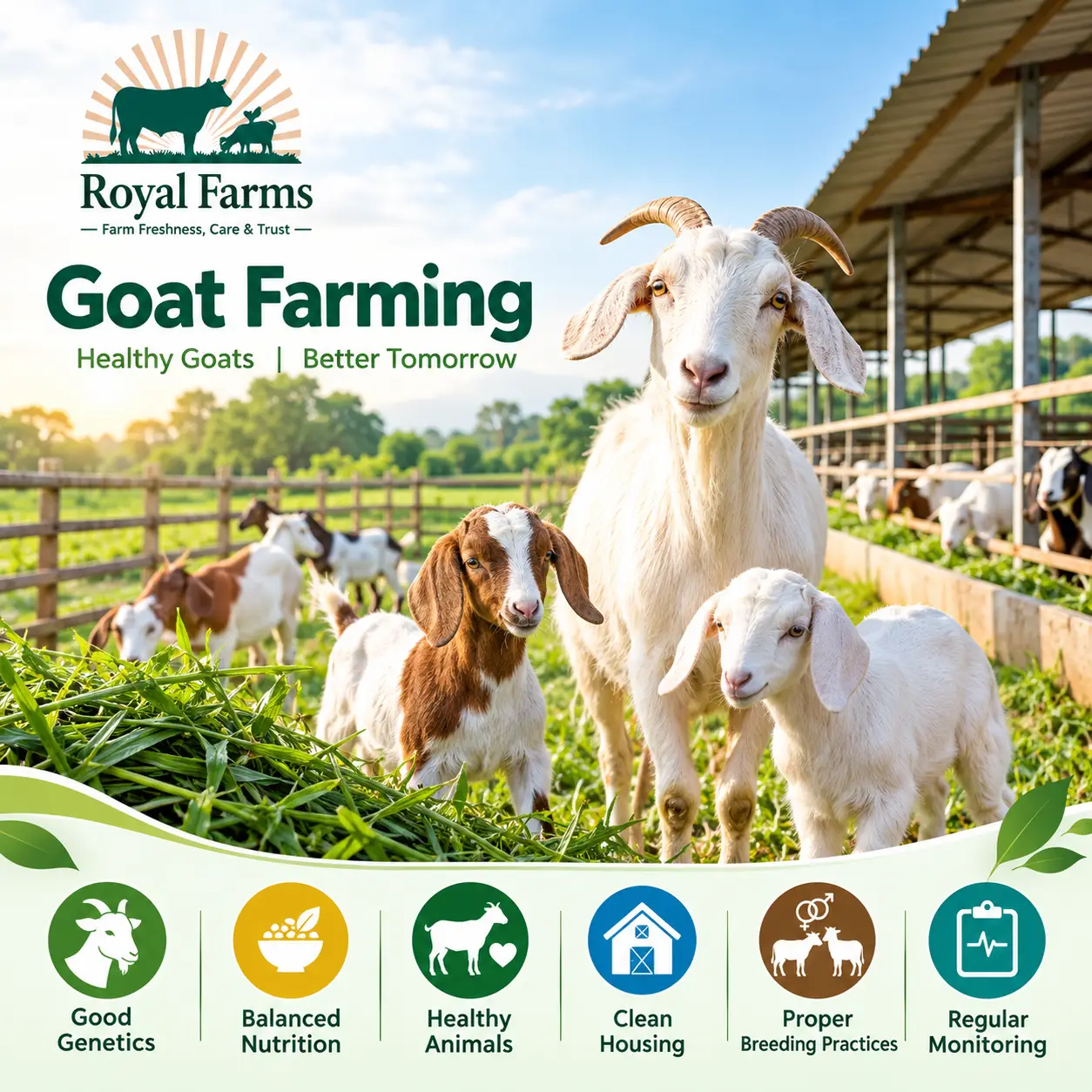
This integrated approach is particularly important in commercial goat farming, where consistent management becomes more important as herd size increases.
Professional farm management can help organize breeding schedules, feeding programs, healthcare routines, housing, record keeping, and daily operations. Royal Farms also highlights breeding and genetics, housing and facilities, and feeding and nutrition as important components of its managed livestock farming approach.
Common Goat Breeding Mistakes to Avoid
Farmers can improve breeding management by avoiding common mistakes such as:
- Selecting breeding animals without checking their health
- Ignoring genetic background
- Poor nutrition before breeding
- Overusing breeding bucks
- Allowing uncontrolled mating
- Failing to maintain breeding records
- Ignoring signs of illness
- Maintaining overcrowded housing
- Introducing new animals without suitable precautions
- Neglecting newborn kid care
Avoiding these issues can make the breeding program more organized and help farmers make better long-term decisions.
Conclusion
Successful goat breeding requires more than mating healthy animals. It depends on careful planning, suitable breeding stock, balanced nutrition, proper healthcare, comfortable housing, hygiene, accurate records, and continuous monitoring. Effective goat breeding management should therefore be integrated into every part of the farm operation.
For farmers involved in commercial goat farming, professional and systematic goat farm management can provide a stronger foundation for maintaining healthy animals and developing a productive herd. By combining good genetics with responsible animal care and organized farm practices, farmers can work toward sustainable herd development and better long-term farm management.
For more information about professionally managed livestock farming, breeding, and sheep and goat farming solutions, visit Royal Farms at https://royalfarms.co.in. If you are planning to start or improve your livestock farming operation, contact us to learn more about Royal Farms’ managed farming approach and available support.