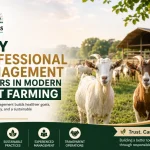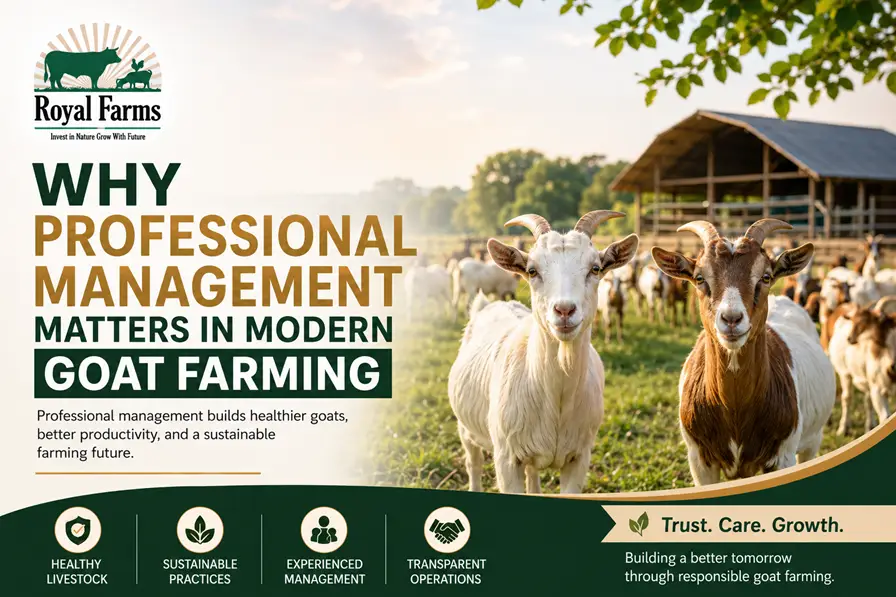
Goat farming has evolved significantly from a traditional livestock activity into a structured and professionally managed agricultural business. With growing demand for quality livestock and increasing interest in sustainable farming, modern goat farms require more than simply providing feed and shelter. They need systematic planning, experienced management, proper animal care, health monitoring, breeding strategies, and transparent farm operations.
Professional management plays a vital role in bringing all these elements together. When every stage of goat farming is handled carefully, farmers can maintain healthier animals, improve operational efficiency, reduce avoidable risks, and create a more sustainable farming model.
What Is Professional Goat Farm Management?
Table of Contents
ToggleProfessional goat farm management means using organized and practical methods to manage the complete lifecycle of goats. It includes breeding and genetics, housing, feeding, healthcare, hygiene, daily monitoring, record keeping, farm operations, and market planning.
Instead of depending only on traditional practices, professionally managed farms use structured systems and experienced teams to make better decisions. Royal Farms follows a managed livestock farming approach that focuses on professional operations, ethical animal care, sustainable practices, and transparent processes.
This approach is particularly important as the size of a goat farm increases. Managing a larger herd requires consistent attention to nutrition, breeding cycles, health, housing conditions, and productivity.
1. Better Animal Health and Welfare
Healthy goats are the foundation of a successful goat farming operation. Professional management ensures that animals receive appropriate nutrition, clean water, suitable housing, hygiene, and regular health monitoring.
A well-managed farm can identify changes in an animal’s behavior, appetite, weight, or physical condition at an early stage. Early attention can help reduce the impact of health problems and support better herd management.
Animal welfare is equally important. Clean, comfortable, and stress-free environments contribute to healthier livestock. Royal Farms emphasizes ethical animal care and aims to raise livestock in clean and stress-free conditions.
2. Scientific Breeding and Genetics
Breeding decisions have a direct influence on the future quality of a goat herd. Professional management involves selecting suitable breeding animals, maintaining breeding records, monitoring reproductive cycles, and avoiding practices that can negatively affect herd quality.
Selective breeding can help improve desirable characteristics and support healthier and more productive livestock over time. Royal Farms highlights breeding and genetics as an important part of its livestock management approach.
A systematic breeding program also makes it easier to monitor herd development and plan future farm requirements.
3. Balanced Feeding and Nutrition
Nutrition is one of the most important components of goat farming. Goats require appropriate quantities of nutrients to support growth, reproduction, immunity, and overall health.
Professional farm management helps ensure that feeding practices are organized according to the animals’ requirements and growth stages. Quality feed, adequate nutrition, and clean drinking water can contribute to healthier livestock and better farm performance.
Royal Farms identifies feeding and nutrition as a key component of its livestock operations, with an emphasis on balanced diets and quality feed to support livestock growth and health.
4. Efficient Farm Operations
Managing a goat farm involves many daily responsibilities. Feeding, cleaning, health checks, breeding management, record keeping, housing maintenance, and market planning all need to be coordinated effectively.
Professional teams can create standard processes for these activities, reducing confusion and helping ensure that important tasks are completed consistently. Royal Farms describes its model as a fully managed livestock operation in which experienced professionals oversee farm activities and daily care.
Efficient operations can also make it easier to identify problems and make timely decisions.
5. Transparency Builds Trust
Transparency is becoming increasingly important in modern agriculture, particularly when multiple stakeholders are involved in a farming operation. Clear communication, proper records, regular updates, and transparent processes help build confidence.
Professional management should not only focus on livestock productivity but also on maintaining clear operational practices. Royal Farms places trust and transparency among its core values and highlights regular updates and clear processes as part of its approach.
This combination of professional care and transparent operations creates a stronger relationship between the farm, its partners, and other stakeholders.
6. Sustainable Farming for Long-Term Growth
Modern goat farming should focus on long-term sustainability rather than short-term results. Responsible use of resources, proper animal care, efficient farm management, and environmentally conscious practices can help create a more resilient farming system.
Sustainable livestock farming also means maintaining a balance between productivity, animal welfare, operational efficiency, and responsible resource use. Royal Farms positions sustainability as an important part of its livestock farming model and emphasizes responsible practices designed for long-term growth.
Why Choose a Professionally Managed Goat Farm?
For anyone interested in modern goat farming, professional management can provide an organized framework for handling the complexities of livestock operations. From breeding and nutrition to healthcare, housing, daily management, and transparency, every component contributes to the overall performance of a farm.
Royal Farms combines professional livestock management with ethical animal care, sustainable farming practices, and transparent operations. Its sheep and goat farming model focuses on integrated breeding and growth, supported by structured farm management.
Conclusion
Professional management is no longer an optional advantage in modern goat farming; it is an important part of building an efficient, responsible, and sustainable livestock operation. Proper breeding, balanced nutrition, preventive healthcare, suitable housing, experienced supervision, transparent processes, and responsible farming practices can work together to create a stronger goat farming system.
At Royal Farms, the focus is on combining professional farm operations with ethical livestock care and sustainable agricultural practices. By bringing expertise, structured management, and responsible farming together, Royal Farms aims to support a modern livestock farming model built on trust, care, and long-term growth.