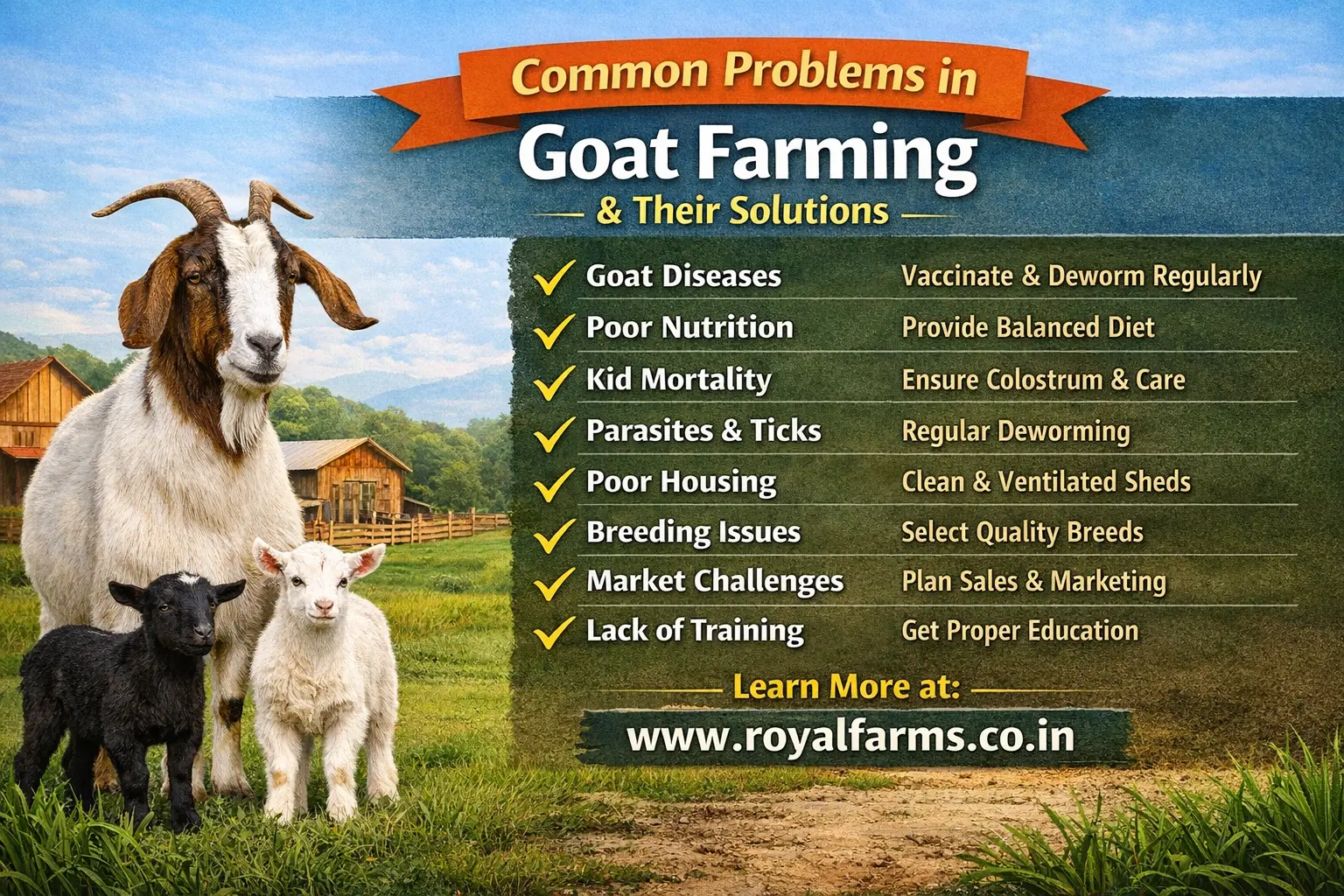
Goat farming has become a popular and profitable livestock business in India due to low investment, high demand for goat milk and meat, and quick returns. However, like any agricultural activity, goat farming also comes with its own set of challenges. Many new and even experienced farmers face problems related to health, feeding, housing, breeding, and management. If these issues are not handled properly, they can lead to losses and reduced productivity. This user-friendly and informative guide explains the common problems in goat farming and their practical solutions, helping farmers build a healthy and profitable goat farming business.
1. Poor Goat Health and Frequent Diseases
Table of Contents
ToggleProblem:
One of the biggest challenges in goat farming is poor health and frequent disease outbreaks. Common goat diseases include PPR (Peste des Petits Ruminants), Foot and Mouth Disease (FMD), pneumonia, diarrhoea, and parasitic infections. These diseases can spread quickly and cause high mortality if not managed in time.
Solution:
- Follow a proper vaccination schedule recommended by veterinary experts
- Deworm goats regularly to control internal parasites
- Keep sick goats isolated from healthy ones
- Consult a veterinarian immediately if symptoms appear
- Maintain farm hygiene to prevent disease spread
Preventive care is always cheaper and more effective than treatment.
2. Improper Feeding and Nutrition Issues
Problem:
Many goat farmers do not provide a balanced diet, which leads to slow growth, weak immunity, low milk production, and poor breeding performance. Feeding only grass or leftover farm waste is a common mistake.
Solution:
- Provide a balanced diet including green fodder, dry fodder, concentrates, minerals, and clean water
- Add mineral mixture and salt regularly
- Ensure pregnant and lactating goats get extra nutrition
- Avoid feeding mouldy or spoiled fodder
Proper nutrition directly impacts goat health and farm profitability.
3. Poor Housing and Shelter Conditions
Problem:
Inadequate housing exposes goats to extreme weather, damp conditions, and infections. Poor ventilation and dirty floors often lead to respiratory problems and foot diseases.
Solution:
- Build a dry, well-ventilated, and raised shed
- Ensure proper drainage to avoid waterlogging
- Clean the shed daily and disinfect regularly
- Provide enough space to prevent overcrowding
Good housing reduces stress and improves goat productivity.
4. High Kid Mortality Rate
Problem:
Many farmers face losses due to high mortality in newborn kids. Reasons include weak immunity, poor colostrum intake, infections, and harsh weather conditions.
Solution:
- Ensure kids receive colostrum within the first few hours of birth
- Keep newborns in a warm, clean, and dry area
- Follow vaccination and deworming schedules
- Monitor kids daily for signs of illness
Healthy kids are the foundation of a profitable goat farming business.
5. Breeding and Reproduction Problems
Problem:
Low conception rate, delayed maturity, and frequent abortions are common breeding problems in goat farming. These issues reduce herd expansion and overall income.
Solution:
- Select healthy and disease-free breeding stock
- Maintain proper male-to-female ratio
- Avoid inbreeding
- Provide adequate nutrition during breeding and pregnancy
- Monitor heat cycles carefully
Good breeding management ensures steady herd growth.
6. Lack of Knowledge and Training
Problem:
Many farmers start goat farming without proper knowledge or training, leading to poor management decisions and financial losses.
Solution:
- Attend goat farming training programmes
- Learn from experienced farmers and experts
- Keep records of feeding, health, breeding, and expenses
- Stay updated with modern goat farming practices
Knowledge is one of the most important tools for success in goat farming.
7. Parasite Infestation (Internal and External)
Problem:
Parasites such as worms, ticks, mites, and lice weaken goats, reduce weight gain, and cause skin and digestive problems.
Solution:
- Follow a regular deworming schedule
- Use anti-parasitic sprays or dips for external parasites
- Keep sheds clean and dry
- Avoid overgrazing on the same land
Parasite control plays a vital role in maintaining herd health.
8. Poor Farm Hygiene and Waste Management
Problem:
Unclean sheds and improper waste disposal create breeding grounds for bacteria, flies, and parasites, increasing disease risk.
Solution:
- Clean sheds daily
- Dispose of manure properly or use it as organic fertiliser
- Disinfect feeding and watering equipment regularly
- Ensure proper drainage
Good hygiene improves goat health and farm environment.
9. Market and Price Fluctuation Issues
Problem:
Many farmers struggle with fluctuating market prices, middlemen dependency, and lack of direct buyers, which affects profitability.
Solution:
- Study local market demand before selling
- Build connections with traders, hotels, and meat shops
- Consider direct selling or contract farming
- Focus on quality breeding and healthy goats for better pricing
Planning market strategies in advance reduces financial risk.
10. Financial Mismanagement
Problem:
Poor financial planning, unnecessary expenses, and lack of record-keeping often lead to losses even in well-managed farms.
Solution:
- Prepare a clear goat farming business plan
- Track expenses, income, and profit regularly
- Start small and expand gradually
- Utilise government schemes and subsidies when available
Good financial management ensures long-term sustainability.
11. Climatic and Weather Challenges
Problem:
Extreme heat, cold, and heavy rainfall can stress goats, affecting their health and productivity.
Solution:
- Provide proper ventilation during summers
- Protect goats from cold winds and rain
- Ensure clean drinking water at all times
- Adjust feeding during seasonal changes
Climate-friendly management improves goat comfort and performance.
12. Lack of Quality Breeds
Problem:
Using low-quality or mixed breeds without proper planning results in slow growth and low returns.
Solution:
- Choose high-yielding goat breeds suitable for your region
- Buy goats from trusted breeders or farms
- Focus on breed improvement through selective breeding
Quality breeds bring better growth, milk, and meat production.
Conclusion
Goat farming can be a highly profitable and sustainable business if common problems are identified and managed effectively. From health care and feeding to housing, breeding, and marketing, every aspect of goat farming requires proper planning and knowledge. By following the solutions discussed above, farmers can reduce risks, improve productivity, and increase profits.
At Royal Farms, we are committed to supporting farmers with quality guidance, healthy livestock practices, and expert knowledge to help you succeed in goat farming. To learn more about professional goat farming solutions, visit our website: https://royalfarms.co.in/ and take the next step towards building a successful goat farming business.
FAQs – Common Problems in Goat Farming
1. What are the most common problems in goat farming?
The most common problems include diseases, poor nutrition, parasite infestation, improper housing, breeding issues, and lack of market access.
2. How can diseases in goats be prevented?
Diseases can be prevented through timely vaccination, regular deworming, proper hygiene, and early veterinary care.
3. Why is proper feeding important in goat farming?
Balanced feeding improves growth, immunity, milk production, and reproduction, directly impacting farm profitability.
4. What causes high kid mortality in goat farming?
Poor colostrum intake, infections, weak immunity, and improper shelter are the main causes of high kid mortality.
5. Is goat farming profitable in India?
Yes, goat farming is highly profitable when managed properly with good breeds, balanced nutrition, disease control, and planned marketing.