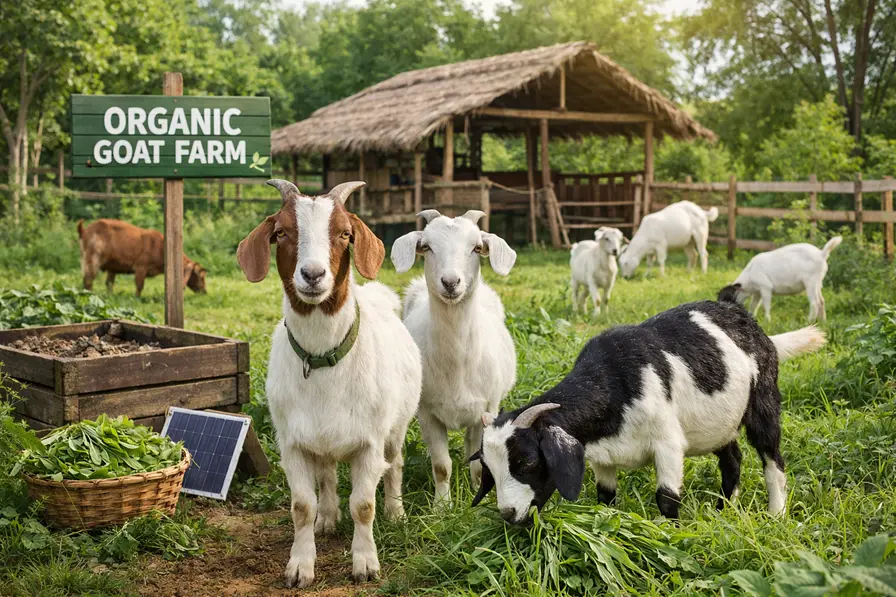
Organic goat farming is rapidly gaining popularity in India as farmers and consumers shift toward healthier, chemical-free, and environmentally friendly agricultural practices. With rising demand for organic milk and naturally raised livestock, goat farming offers an excellent opportunity for sustainable income generation. At Royal Farms, we believe organic goat farming is not just a business model but a long-term solution for profitable and responsible livestock management.
In this detailed guide, we will explore what organic goat farming is, its benefits, management practices, investment aspects, and how it can become a sustainable livestock model for the future.
What is Organic Goat Farming?
Table of Contents
ToggleOrganic goat farming refers to raising goats under natural conditions without the use of synthetic chemicals, growth hormones, antibiotics (unless medically necessary), or artificial feed additives. The system focuses on:
- Natural grazing
- Organic feed and fodder
- Proper housing and hygiene
- Ethical animal welfare
- Eco-friendly waste management
The goal is to produce healthy goats and high-quality milk while protecting soil, water, and biodiversity.
Why Choose Organic Goat Farming?
1. Growing Market Demand
Consumers are becoming more health conscious. Organic milk and naturally raised livestock products are in high demand, especially in urban areas. This growing awareness has created a profitable niche market for organic goat farmers.
2. Higher Selling Price
Organic products often fetch premium prices compared to conventional livestock products. Farmers can earn better margins by marketing certified organic goat milk and related products.
3. Lower Long-Term Input Costs
While initial setup may require investment in infrastructure and organic certification, long-term costs decrease because farmers rely more on natural grazing, farm-grown fodder, and preventive health practices rather than expensive chemicals.
4. Environmental Sustainability
Organic goat farming supports:
- Soil fertility improvement
- Reduced chemical contamination
- Better pasture management
- Lower carbon footprint
This makes it a truly sustainable livestock model.
Benefits of Organic Goat Farming
Healthier Livestock
Goats raised organically are less exposed to chemical residues and harmful feed additives. Natural grazing improves digestion and immunity.
Improved Soil Fertility
Goat manure is an excellent organic fertilizer. It enriches the soil with nutrients and improves crop productivity when properly composted.
Reduced Disease Risk
Organic systems focus on preventive healthcare such as:
- Clean housing
- Proper ventilation
- Balanced nutrition
- Vaccination as per veterinary guidelines
This reduces disease outbreaks and mortality rates.
Diversified Income Opportunities
Farmers can generate income from:
- Organic goat milk
- Organic manure
- Breeding services
- Sale of young goats
Best Goat Breeds for Organic Farming in India
Choosing the right breed is essential for success. Some suitable breeds include:
- Sirohi – Hardy and adaptable to dry climates
- Jamunapari – Known for good milk production
- Beetal – Dual-purpose breed for milk and meat
- Barbari – Ideal for small-scale farmers
Selecting breeds according to climate, land availability, and market demand is important for long-term sustainability.
Organic Feeding Practices
Feeding plays a crucial role in organic goat farming.
1. Natural Grazing
Allow goats to graze on pesticide-free pastures. Rotational grazing helps:
- Prevent overgrazing
- Improve pasture quality
- Reduce parasite load
2. Organic Fodder Cultivation
Farmers can grow:
- Napier grass
- Lucerne (alfalfa)
- Cowpea
- Maize fodder
Avoid chemical fertilizers and pesticides while cultivating fodder.
3. Mineral Supplements
Natural mineral mixtures and herbal supplements can be provided to maintain nutritional balance.
Housing and Farm Management
Proper housing ensures comfort, hygiene, and productivity.
Key Housing Requirements:
- Elevated and well-drained flooring
- Good ventilation
- Adequate space per goat
- Clean drinking water supply
Regular cleaning reduces infection risks and maintains overall herd health.
Health Management in Organic Goat Farming
Organic farming emphasizes preventive care over curative treatment.
Preventive Measures Include:
- Regular vaccination schedule
- Deworming using natural or approved methods
- Herbal remedies for minor illnesses
- Routine veterinary check-ups
If antibiotics are necessary, proper withdrawal periods must be followed before selling milk or animals as organic.
Waste Management and Sustainability
Goat manure and farm waste can be converted into compost or vermicompost. This:
- Reduces environmental pollution
- Improves soil fertility
- Lowers dependency on chemical fertilizers
Rainwater harvesting and solar-powered systems can further enhance sustainability on the farm.
Investment and Profit Potential
Initial Investment Includes:
- Land preparation
- Shed construction
- Purchase of goats
- Fodder cultivation
- Water facilities
While organic farming may require slightly higher initial setup costs, operational costs reduce over time due to self-sustaining practices.
Profitability depends on:
- Breed selection
- Proper management
- Market linkage
- Direct selling strategies
With proper planning, farmers can achieve steady and sustainable returns.
Certification and Marketing
To sell products as “organic,” farmers may seek organic certification from authorized bodies. Certification builds consumer trust and allows farmers to charge premium prices.
Marketing Strategies:
- Direct farm-to-consumer sales
- Local dairy networks
- Organic food stores
- Social media promotion
- Partnerships with health-focused retailers
Brand positioning plays a crucial role in long-term success.
Challenges in Organic Goat Farming
Like any agricultural venture, organic goat farming has challenges:
- Initial certification process
- Limited awareness in rural markets
- Need for skilled management
- Pest and parasite control without chemicals
However, with proper training and expert guidance, these challenges can be managed effectively.
Why Organic Goat Farming is the Future
The future of agriculture lies in sustainability. Organic goat farming supports:
- Eco-friendly livestock production
- Healthier food systems
- Better farmer income stability
- Reduced environmental damage
As consumer demand for organic products continues to grow, this model offers long-term economic and environmental benefits.
Conclusion
Organic goat farming is more than just a livestock business—it is a sustainable and responsible approach to agriculture. By focusing on natural feeding, ethical animal care, and eco-friendly practices, farmers can build a profitable enterprise while protecting the environment.
At Royal Farms, we are committed to promoting sustainable livestock practices and helping farmers adopt efficient, organic goat farming methods. With proper planning, breed selection, and management, organic goat farming can become a reliable source of income and a powerful step toward a greener agricultural future.
If you are planning to start organic goat farming, now is the right time to invest in a model that benefits both your farm and the environment.
Frequently Asked Questions
1. Is organic goat farming profitable in India?
Yes, organic goat farming can be highly profitable due to the growing demand for chemical-free milk and naturally raised livestock. Organic products often sell at premium prices, and long-term input costs are lower because farmers rely on natural grazing and farm-grown fodder.
2. What is the difference between organic and conventional goat farming?
Organic goat farming avoids synthetic chemicals, artificial feed additives, and unnecessary antibiotics. It focuses on natural grazing, organic fodder, preventive healthcare, and eco-friendly waste management, whereas conventional farming may use chemical-based feeds and medications.
3. Which goat breeds are best for organic farming?
Some of the best breeds for organic goat farming in India include Sirohi, Jamunapari, Beetal, and Barbari. These breeds are hardy, adaptable to different climates, and suitable for milk and breeding purposes.
4. How much investment is required to start organic goat farming?
The investment depends on factors such as land availability, number of goats, shed construction, and fodder cultivation. A small-scale organic goat farm may require moderate initial investment, but operational costs reduce over time due to sustainable practices.
5. Do I need certification to sell organic goat products?
Yes, if you want to label and market your products as “organic,” you may need certification from authorized organic certification bodies. Certification increases consumer trust and allows you to charge premium prices in the market.