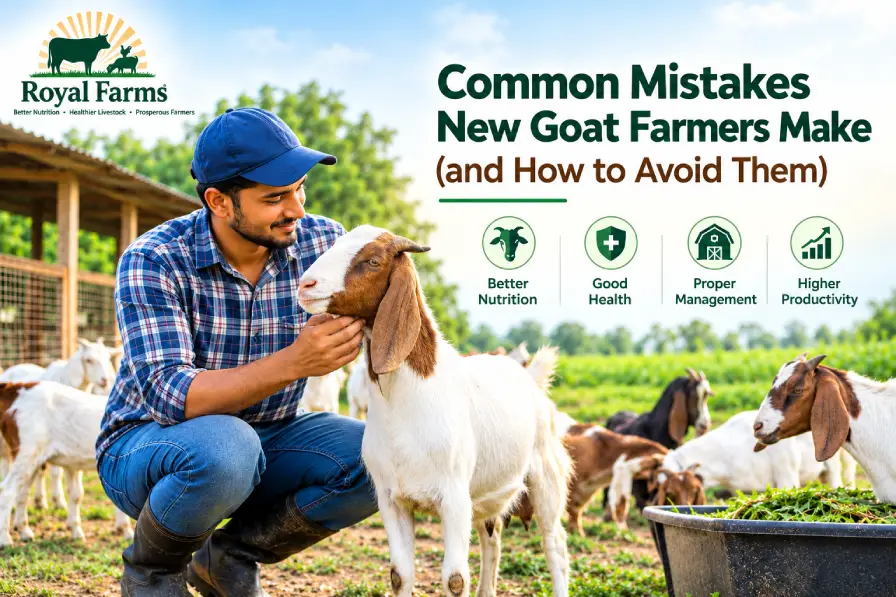
Goat farming is a promising livestock farming activity that can provide opportunities for farmers interested in breeding, milk production, and meat production. However, starting a goat farm requires proper planning, knowledge, and consistent management. Many beginners enter the business expecting quick profits but overlook essential factors such as breed selection, nutrition, housing, disease prevention, and farm finances.
Understanding these challenges before starting a farm can help new farmers avoid unnecessary expenses, protect animal health, and improve productivity. Whether you are planning a small goat farm or a larger commercial operation, learning from common mistakes can help you build a more sustainable farming business.
In this guide, we will explore the most common mistakes new goat farmers make and explain practical ways to avoid them.
1. Starting Goat Farming Without Proper Planning
Table of Contents
ToggleOne of the biggest mistakes beginners make is starting a goat farm without preparing a clear business plan. They may purchase animals, build shelters, and arrange feed without calculating the overall investment or understanding the farm’s requirements.
Without proper planning, farmers may face unexpected expenses related to animal healthcare, labor, feed, housing, and transportation.
How to avoid this mistake:
- Research the local demand for goats and goat-related products.
- Decide whether your primary goal is breeding, milk production, or meat production.
- Estimate the initial investment and recurring operating costs.
- Prepare a realistic budget for feed, veterinary care, labor, and maintenance.
- Start with a manageable herd size and expand as your experience grows.
A practical business plan helps farmers make informed decisions and prepare for unexpected challenges.
2. Choosing the Wrong Goat Breed
Breed selection plays an important role in the success of a goat farm. Some beginners choose animals based only on their appearance, availability, or purchase price. However, different breeds have different requirements, production characteristics, and adaptability to local environmental conditions.
A breed that performs well in one region may not be the best choice for another due to differences in temperature, humidity, feed availability, and disease exposure.
How to avoid this mistake:
Choose breeds according to your farming objectives, local climate, available feed, and management capacity. Research breeds that are well adapted to your region and consult experienced farmers or veterinarians before purchasing animals.
Buy goats from reputable breeders who can provide information about the animals’ age, health, vaccination history, and breeding background. Selecting suitable, healthy animals can help reduce management difficulties and improve long-term farm performance.
3. Ignoring Proper Nutrition and Feeding
Nutrition is essential for maintaining goat health, supporting growth, improving reproductive performance, and producing quality milk. New farmers sometimes rely on a single type of feed or provide insufficient quantities of nutritious forage.
Poor feeding practices can lead to slow growth, reduced productivity, weak kids, and nutritional deficiencies. Sudden changes in diet may also cause digestive problems.
How to avoid this mistake:
- Provide clean, good-quality fodder and suitable forage.
- Use balanced feed according to the animal’s age, body condition, and production stage.
- Ensure that pregnant goats, lactating does, growing kids, and breeding bucks receive appropriate nutrition.
- Provide clean drinking water throughout the day.
- Introduce changes in feed gradually.
- Consult a qualified veterinarian or livestock nutritionist when preparing a feeding plan.
Proper nutrition does not necessarily mean spending more money on expensive feed. It means providing the right nutrients in suitable quantities while making effective use of locally available feed resources.
4. Providing Poor Housing and Ventilation
Goats need a clean, dry, comfortable, and well-ventilated shelter. Beginners sometimes build overcrowded sheds or use damp flooring that allows moisture, waste, and harmful microorganisms to accumulate.
Poor housing conditions can increase the risk of respiratory problems, parasitic infections, injuries, and other health issues. Inadequate drainage can also make cleaning more difficult.
How to avoid this mistake:
Design a shelter that provides adequate space, good airflow, protection from extreme weather, and proper drainage. Keep floors dry and clean, and ensure that animals have access to shade and protection from heavy rain and strong winds.
Separate feeding and resting areas where practical, and provide clean feeding equipment. Regularly remove manure and wet bedding to maintain hygiene.
Good housing supports animal comfort and makes everyday farm management easier.
5. Neglecting Preventive Healthcare
Waiting until a goat becomes seriously ill before seeking veterinary assistance is a common and costly mistake. Some health problems may develop gradually, making early detection especially important.
New farmers may also overlook vaccination schedules, parasite control, hoof care, and routine health monitoring.
How to avoid this mistake:
Develop a preventive healthcare plan with a qualified veterinarian. Follow locally recommended vaccination schedules and establish an appropriate parasite-control program based on veterinary advice.
Observe goats daily for changes in appetite, movement, behavior, breathing, and body condition. Keep records of vaccinations, treatments, illnesses, and breeding activities.
Newly purchased animals should be kept separate from the existing herd for an appropriate quarantine period determined with veterinary guidance. This helps reduce the risk of introducing infectious diseases to the farm.
If a goat shows signs of serious illness, seek veterinary attention promptly rather than relying on unverified home remedies.
6. Purchasing Goats Without Checking Their Health
Buying animals without inspecting their health or background can create problems for an entire herd. A goat that appears healthy at first may have an underlying health condition, poor body condition, or an unknown breeding history.
Choosing animals only because they are inexpensive can also lead to higher veterinary expenses later.
How to avoid this mistake:
Inspect animals carefully before purchasing them. Look for normal movement, alert behavior, healthy-looking eyes, a clean coat, and an appropriate body condition. Check for visible injuries, abnormal breathing, persistent coughing, diarrhea, or unusual discharge.
Ask the seller for available health, vaccination, treatment, and breeding records. Whenever possible, arrange a veterinary examination before finalizing the purchase.
Remember that visible appearance alone cannot confirm that an animal is free from disease. A professional health assessment provides additional protection for your investment.
7. Poor Breeding Management
Breeding without a proper plan can result in weak offspring, unexpected kidding dates, inbreeding, and increased management costs. Beginners may also fail to maintain records of mating dates, pregnancy status, and kidding history.
How to avoid this mistake:
Maintain separate and accurate records for breeding bucks and does. Track mating dates, previous pregnancies, kidding outcomes, and the health of newborn kids.
Avoid uncontrolled breeding and consult a veterinarian or experienced breeding professional when selecting animals. Prevent close-relative mating through appropriate breeding records and herd management.
Provide pregnant goats with suitable nutrition, a clean resting area, and regular observation. Prepare for kidding in advance so that assistance can be arranged if complications occur.
Good breeding management helps farmers make better decisions about herd quality and future productivity.
8. Overlooking Farm Hygiene and Waste Management
A clean farm is essential for protecting animal health. However, some new farmers do not establish a regular cleaning routine or allow manure and leftover feed to accumulate.
Poor hygiene can attract flies and other pests, contaminate feeding areas, and create conditions that favor the spread of certain diseases.
How to avoid this mistake:
Create a daily and weekly cleaning schedule. Remove manure, spoiled feed, and wet bedding regularly. Clean feeding and watering equipment and maintain suitable drainage around the shed.
Store feed in a dry, protected area to prevent contamination and spoilage. Manage manure responsibly through appropriate composting or other suitable disposal methods.
Consistent hygiene practices can improve the farm environment and reduce avoidable health risks.
9. Failing to Maintain Farm Records
Many beginners manage their farms based on memory rather than written records. This makes it difficult to understand operating costs, identify health trends, track breeding performance, and measure profitability.
Without accurate records, farmers may continue unproductive practices without realizing their financial impact.
How to avoid this mistake:
Maintain records of:
- Animal purchases and identification numbers.
- Feed and labor expenses.
- Veterinary visits, vaccinations, and treatments.
- Breeding dates and kidding outcomes.
- Kid growth and animal mortality.
- Sales revenue and other farm income.
Review these records regularly to understand which areas require improvement. Even a simple notebook or spreadsheet can help farmers make more informed business decisions.
10. Expecting Quick Profits Without Understanding the Market
Goat farming requires time, investment, and consistent management. Some beginners expect immediate returns without researching local buyers, seasonal demand, transportation costs, or ongoing operating expenses.
Unrealistic profit expectations may encourage farmers to expand too quickly or borrow more money than their business can support.
How to avoid this mistake:
Research your local market before increasing herd size. Identify potential buyers, understand their requirements, and compare expected selling prices with production and operating costs.
Prepare a realistic financial forecast that accounts for feed, labor, veterinary care, housing maintenance, transportation, and other expenses. Keep emergency funds available for unexpected situations.
Expand gradually when your farm management systems, finances, and market opportunities can support additional animals. Remember that profitability depends on several factors, including animal health, productivity, management efficiency, and market conditions.
Conclusion
Goat farming can offer valuable opportunities, but success depends on making informed decisions and avoiding common management mistakes. Proper planning, suitable breed selection, balanced nutrition, clean housing, preventive healthcare, responsible breeding, and accurate recordkeeping all contribute to a healthier and more productive herd.
New farmers should focus on learning the fundamentals before expanding their operations. Seeking guidance from veterinarians, experienced livestock farmers, and qualified agricultural professionals can help prevent avoidable problems and support better farm management decisions.
For more information about livestock farming, animal care, and professional farm management practices, visit Royal Farms at https://royalfarms.co.in and explore helpful resources to support your farming journey.