Goat farming is becoming one of the most profitable livestock businesses in India. Farmers prefer goats because they require less investment, adapt easily to different climates, and provide multiple sources of income through milk, meat, and breeding. However, maintaining healthy goats is one of the biggest challenges in successful goat farming. Diseases can spread quickly among goats and cause major financial losses if proper care is not taken.
A healthy goat farm depends on good management, clean housing, balanced nutrition, regular vaccination, and timely treatment. Farmers who understand common goat diseases and their prevention methods can reduce mortality rates and improve overall farm productivity. Preventive healthcare is always more effective and affordable than treating serious illnesses after they spread.
In this blog, we will discuss the most common goat diseases, their symptoms, causes, and prevention tips that every goat farmer should know.
Also Read: Goat Farming Business: Complete Guide for Beginners
Importance of Disease Prevention in Goat Farming
Table of Contents
ToggleDisease prevention plays a vital role in commercial goat farming. Healthy goats grow faster, reproduce better, and provide higher milk and meat production. On the other hand, infected animals become weak, lose weight, and may even die if treatment is delayed.
Benefits of proper disease prevention include:
- Better growth and productivity
- Lower treatment expenses
- Reduced mortality rates
- Improved breeding performance
- Better quality milk and meat
- Higher profits for farmers
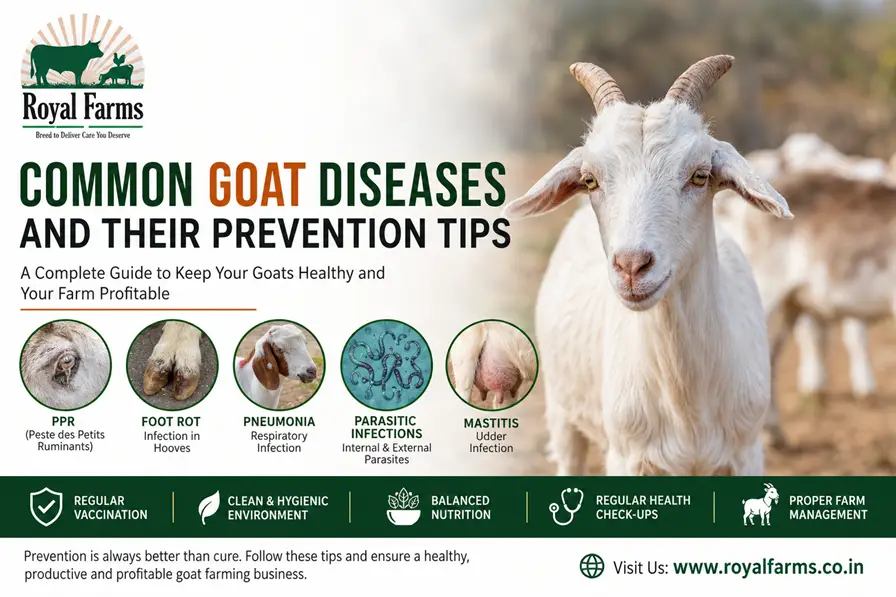
Proper farm hygiene, regular vaccination, clean water, nutritious feed, and veterinary support are essential for maintaining healthy goats.
1. PPR (Peste des Petits Ruminants)
PPR is one of the most dangerous viral diseases affecting goats. It spreads rapidly from one animal to another and can cause heavy losses in goat farming.
Symptoms of PPR
- High fever
- Watery eyes and nasal discharge
- Mouth ulcers
- Severe diarrhoea
- Weakness and dehydration
- Difficulty breathing
Prevention Tips
- Vaccinate goats regularly
- Keep infected animals isolated
- Maintain proper sanitation in the shed
- Avoid contact with infected animals from other farms
Timely vaccination is the best way to protect goats from PPR outbreaks.
2. Foot Rot
Foot rot is a bacterial infection that mainly affects goats kept in wet and muddy conditions. It causes pain in the hooves and difficulty walking.
Symptoms of Foot Rot
- Swelling between the hooves
- Bad smell from infected feet
- Limping or difficulty walking
- Reduced feeding due to pain
Prevention Tips
- Keep the goat shed dry and clean
- Avoid waterlogging around the farm
- Trim hooves regularly
- Use disinfectant foot baths
Good flooring and proper drainage systems help prevent foot-related infections.
3. Pneumonia
Pneumonia is a common respiratory disease in goats, especially during winter or sudden weather changes. Poor ventilation and overcrowding increase the risk of infection.
Symptoms of Pneumonia
- Coughing
- Fever
- Nasal discharge
- Fast breathing
- Loss of appetite
Prevention Tips
- Provide proper ventilation in goat sheds
- Protect goats from cold winds and rain
- Avoid overcrowding
- Keep bedding dry and clean
Clean and airy shelters are important for reducing respiratory problems in goats.
4. Parasitic Infections
Parasites are one of the biggest problems in goat farming. Internal parasites such as worms and external parasites like ticks and lice weaken goats and reduce their growth.
Symptoms of Parasitic Infection
- Weight loss
- Weakness
- Rough hair coat
- Diarrhoea
- Skin irritation
- Anaemia
Prevention Tips
- Follow a proper deworming schedule
- Keep sheds clean and dry
- Use anti-parasitic medicines when needed
- Practice rotational grazing
Regular parasite control improves goat health and productivity.
5. Enterotoxemia
Enterotoxemia is a serious bacterial disease caused by sudden dietary changes or overeating grains. It often affects fast-growing goats.
Symptoms of Enterotoxemia
- Stomach pain
- Sudden weakness
- Diarrhoea
- Nervous signs
- Sudden death in severe cases
Prevention Tips
- Avoid sudden changes in feed
- Provide balanced nutrition
- Do not overfeed grains
- Vaccinate goats regularly
Maintaining a stable feeding schedule helps prevent digestive disorders.
6. Mastitis
Mastitis is an udder infection commonly found in dairy goats. It affects milk production and milk quality.
Symptoms of Mastitis
- Swollen udder
- Pain during milking
- Thick or abnormal milk
- Fever and discomfort
Prevention Tips
- Maintain cleanliness during milking
- Wash udders before and after milking
- Keep bedding clean
- Treat infected goats immediately
Proper milking hygiene is essential for preventing mastitis.
7. Coccidiosis
Coccidiosis is a parasitic disease that mainly affects young goat kids. It spreads through contaminated feed, water, and dirty surroundings.
Symptoms of Coccidiosis
- Bloody diarrhoea
- Weight loss
- Weakness
- Poor growth
Prevention Tips
- Keep feeding and watering areas clean
- Avoid overcrowding
- Maintain dry bedding
- Provide clean drinking water
Young goats require extra care because they are more vulnerable to infections.
8. Goat Pox
Goat pox is a contagious viral disease that spreads quickly among goats.
Symptoms of Goat Pox
- Skin lesions and scabs
- Fever
- Reduced appetite
- Weakness
Prevention Tips
- Vaccinate goats on time
- Isolate infected animals
- Disinfect sheds regularly
- Maintain farm hygiene
Quick action can prevent the disease from spreading across the herd.
9. Bloat
Bloat occurs when excessive gas builds up in the stomach. It usually happens when goats consume too much green fodder or wet feed.
Symptoms of Bloat
- Swollen stomach
- Difficulty breathing
- Restlessness
- Loss of appetite
Prevention Tips
- Avoid overfeeding lush green fodder
- Feed goats in balanced quantities
- Provide dry fodder along with green feed
- Ensure proper digestion through regular feeding schedules
Immediate treatment is important because severe bloat can become life-threatening.
10. Tetanus
Tetanus is a bacterial disease that enters through wounds or cuts in the body.
Symptoms of Tetanus
- Muscle stiffness
- Difficulty walking
- Lockjaw
- Convulsions
Prevention Tips
- Vaccinate goats regularly
- Keep wounds clean and disinfected
- Use sterile equipment during procedures
Proper wound care greatly reduces the risk of tetanus infection.
General Tips to Keep Goats Healthy
Maintain Proper Hygiene
Clean sheds reduce bacterial growth and prevent disease spread. Goat shelters should be cleaned daily, and waste should be removed regularly.
Provide Balanced Nutrition
Healthy goats need green fodder, dry fodder, minerals, and clean drinking water. Good nutrition strengthens immunity and supports faster growth.
Follow Vaccination Schedule
Vaccination protects goats from deadly diseases like PPR, Enterotoxemia, Goat Pox, and Tetanus. Farmers should consult veterinarians for proper vaccination schedules.
Isolate Sick Animals
Infected goats should be separated immediately to stop diseases from spreading to healthy animals.
Regular Veterinary Check-ups
Routine health monitoring helps detect diseases early. Veterinary experts can guide farmers on medicines, nutrition, and preventive care.
Avoid Overcrowding
Overcrowded sheds increase stress and disease transmission. Proper space should be provided for each goat.
Maintain Clean Water Supply
Contaminated water spreads infections quickly. Goats should always have access to clean and fresh drinking water.
Role of Farm Management in Disease Prevention
Successful goat farming depends heavily on farm management practices. Farmers should maintain proper records of vaccination, deworming, breeding, and health check-ups. Good management not only reduces disease risks but also improves productivity and profitability.
Proper ventilation, quality feed, clean surroundings, and stress-free conditions help goats remain healthy throughout the year. Farmers should also quarantine newly purchased animals before mixing them with the herd.
Conclusion
Goat diseases can create serious challenges for farmers, but most health problems can be prevented with proper care and management. Diseases like PPR, pneumonia, foot rot, mastitis, parasitic infections, goat pox, and enterotoxemia can significantly affect goat farming profits if ignored. However, maintaining hygiene, providing balanced nutrition, following vaccination schedules, and monitoring goat health regularly can reduce the chances of infection.
Healthy goats mean better productivity, improved breeding, higher milk and meat production, and better profits for farmers. Farmers who focus on preventive healthcare and proper farm management can build a successful and sustainable goat farming business.
To learn more about modern goat farming practices, farm setup, goat breeding, and livestock management, visit Royal Farms at https://royalfarms.co.in/.