Goat farming is one of the most profitable livestock businesses in India. Goats are known for their adaptability, low maintenance requirements, and ability to thrive in various climatic conditions. However, like all livestock, goats are vulnerable to several health issues that can affect their growth, productivity, and overall profitability. Understanding common goat health problems and implementing preventive measures can help farmers maintain healthy herds and reduce economic losses. Early diagnosis, proper nutrition, vaccination, and good farm management practices are essential for successful goat farming. In this article, we will explore the most common goat health problems in India, their symptoms, causes, and practical prevention methods.
Why Goat Health Management Is Important
Table of Contents
ToggleHealthy goats grow faster, reproduce efficiently, and provide better returns through meat, milk, and breeding programs. Poor health management can lead to:
- Reduced weight gain
- Lower milk production
- Increased mortality rates
- Higher veterinary expenses
- Reduced breeding performance
- Financial losses for farmers
Regular monitoring and preventive healthcare are key to maintaining a productive goat farm.
Common Goat Health Problems in India
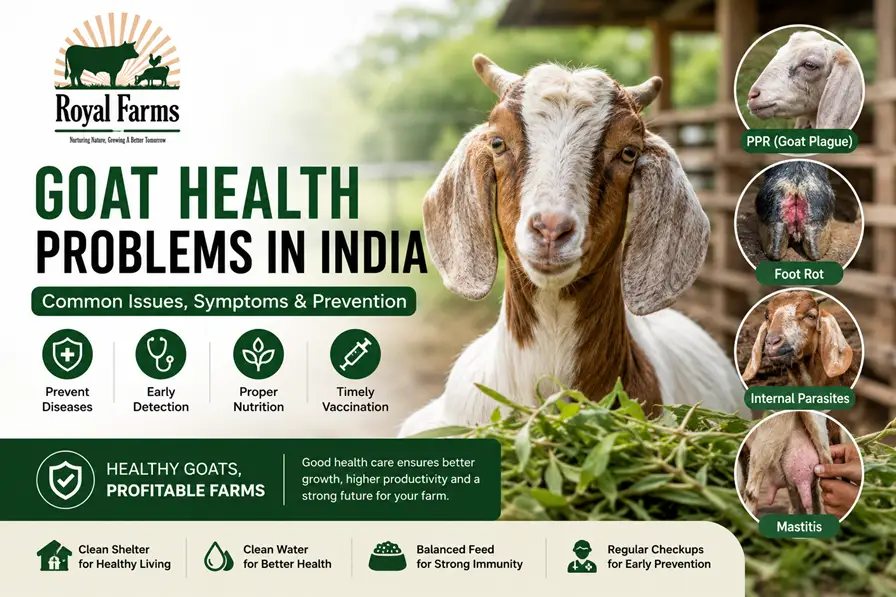
1. Peste des Petits Ruminants (PPR)
PPR, commonly known as Goat Plague, is one of the most serious viral diseases affecting goats in India.
Symptoms:
- High fever
- Nasal discharge
- Eye infections
- Diarrhea
- Loss of appetite
- Difficulty breathing
Prevention:
- Timely vaccination
- Isolation of infected animals
- Maintaining proper farm hygiene
- Regular veterinary inspections
Vaccination remains the most effective method for controlling PPR outbreaks.
2. Foot Rot
Foot rot is a bacterial infection that affects the hooves of goats, especially during rainy seasons.
Symptoms:
- Lameness
- Swollen hooves
- Foul smell from feet
- Difficulty walking
Prevention:
- Keep housing areas dry
- Regular hoof trimming
- Foot baths with disinfectant solutions
- Proper drainage systems
Good sanitation significantly reduces the risk of foot rot.
3. Internal Parasites
Parasitic infestations are among the most common goat health problems in India. Worm infections can severely impact growth and productivity.
Symptoms:
- Weight loss
- Diarrhea
- Poor coat condition
- Weakness
- Anemia
Prevention:
- Regular deworming schedules
- Rotational grazing
- Clean feeding areas
- Proper manure management
Routine parasite control programs are essential for maintaining herd health.
4. Pneumonia
Pneumonia commonly affects young kids and goats exposed to sudden weather changes.
Symptoms:
- Coughing
- Fever
- Nasal discharge
- Breathing difficulties
- Reduced feed intake
Prevention:
- Proper ventilation
- Dry and clean housing
- Avoid overcrowding
- Adequate nutrition
Early treatment improves recovery rates and prevents complications.
5. Mastitis
Mastitis is an infection of the udder that affects milk-producing goats.
Symptoms:
- Swollen udder
- Reduced milk production
- Pain during milking
- Abnormal milk appearance
Prevention:
- Proper milking hygiene
- Clean bedding
- Regular udder inspections
- Immediate treatment of infections
Maintaining cleanliness during milking helps prevent mastitis.
6. Enterotoxemia
Enterotoxemia is a bacterial disease often linked to sudden dietary changes and high-concentrate feeding.
Symptoms:
- Abdominal pain
- Diarrhea
- Sudden death in severe cases
- Nervous symptoms
Prevention:
- Vaccination
- Gradual feed changes
- Balanced nutrition
- Avoid overfeeding grains
Proper feeding management is critical for prevention.
Nutritional Deficiencies in Goats
Many health problems arise due to poor nutrition.
Calcium Deficiency
Can lead to weak bones, poor growth, and reproductive issues.
Phosphorus Deficiency
Affects energy metabolism and breeding performance.
Vitamin A Deficiency
Causes vision problems and weakened immunity.
Protein Deficiency
Results in slow growth and reduced productivity.
Providing balanced feed with essential minerals and vitamins supports overall health and disease resistance.
Importance of Vaccination Programs
Vaccination is one of the most cost-effective ways to prevent major goat diseases.
Common vaccinations include:
- PPR Vaccine
- Enterotoxemia Vaccine
- Foot and Mouth Disease (FMD) Vaccine
- Hemorrhagic Septicemia Vaccine
Farmers should consult veterinarians to establish an appropriate vaccination schedule based on local disease risks.
Proper Housing for Disease Prevention
Well-designed housing reduces stress and minimizes disease outbreaks.
Ideal goat housing should provide:
- Good ventilation
- Dry flooring
- Adequate space
- Protection from extreme weather
- Easy cleaning and sanitation
Clean and comfortable housing contributes significantly to goat health.
Best Feeding Practices for Healthy Goats
Nutrition plays a major role in disease prevention and productivity.
Feed Recommendations:
- Green fodder
- Dry fodder
- Concentrate feed
- Mineral mixtures
- Clean drinking water
Healthy feeding habits strengthen immunity and improve growth rates.
Biosecurity Measures Every Goat Farm Should Follow
Biosecurity helps prevent disease introduction and spread.
Important measures include:
- Quarantine new animals
- Restrict visitor access
- Clean equipment regularly
- Dispose of dead animals safely
- Maintain vaccination records
Strong biosecurity practices protect both livestock and farm profitability.
Signs of a Healthy Goat
Farmers should regularly monitor their animals.
Healthy goats generally exhibit:
- Bright eyes
- Smooth and shiny coat
- Good appetite
- Active behavior
- Normal breathing
- Healthy body condition
Any unusual changes should be investigated promptly.
When to Contact a Veterinarian
Seek veterinary assistance if goats show:
- Persistent fever
- Severe diarrhea
- Breathing difficulties
- Loss of appetite
- Sudden weight loss
- Unusual behavior
Early intervention can prevent disease spread and reduce treatment costs.
Conclusion
Goat farming can be highly rewarding when proper health management practices are followed. Common goat health problems in India such as PPR, foot rot, pneumonia, mastitis, and parasite infestations can significantly affect productivity if left untreated. Through regular vaccinations, balanced nutrition, proper housing, effective biosecurity, and routine veterinary care, farmers can maintain healthy and productive goat herds.
At Royal Farms, we believe that successful goat farming starts with excellent animal health management. By adopting modern livestock care practices, providing proper nutrition, and focusing on disease prevention, Royal Farms is committed to promoting sustainable and profitable goat farming for long-term success.