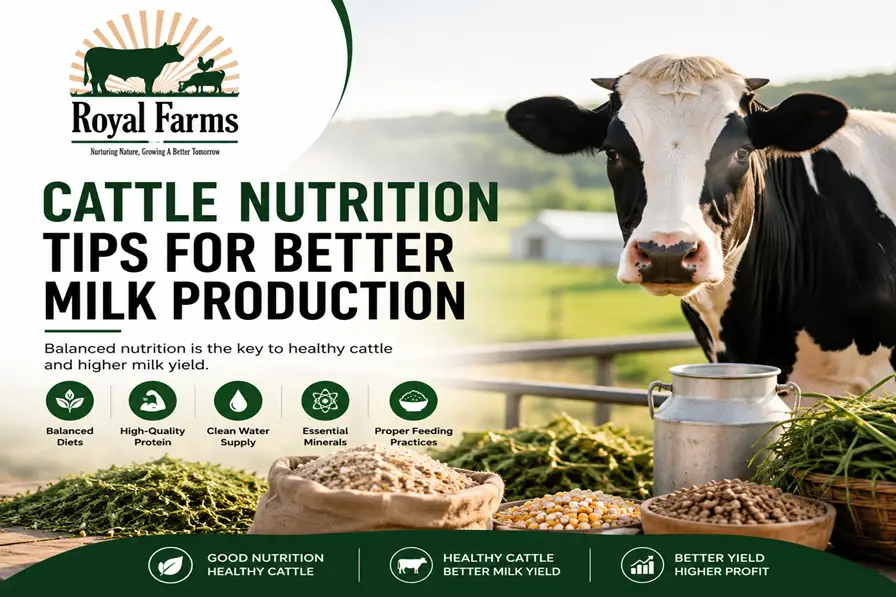
Milk production is one of the most important factors determining the profitability of dairy farming. While genetics, health management, and environmental conditions play significant roles, proper cattle nutrition remains the foundation of high milk yield and quality. A well-balanced diet ensures that dairy cattle receive the nutrients needed to maintain health, reproduce efficiently, and produce maximum quantities of nutritious milk. Farmers who focus on providing the right balance of proteins, carbohydrates, minerals, vitamins, and clean water often see noticeable improvements in milk production. Whether you manage a small dairy farm or a large commercial operation, understanding cattle nutrition can help you achieve better productivity and long-term sustainability. In this guide, we will discuss essential cattle nutrition tips that can help improve milk production while maintaining the overall health and well-being of dairy cattle.
Also Read: Dairy Cattle Farming in India: Complete Guide for Farmers
Why Nutrition Matters in Milk Production
Table of Contents
ToggleDairy cattle require significant amounts of energy and nutrients to produce milk. When nutritional needs are not met, cows may experience reduced milk yield, poor reproductive performance, weakened immunity, and increased susceptibility to diseases.
Proper nutrition helps:
- Increase milk quantity and quality
- Improve animal health
- Support reproductive efficiency
- Reduce veterinary costs
- Enhance feed conversion efficiency
- Increase farm profitability
A balanced feeding program ensures that cattle can meet both their maintenance requirements and the additional demands of milk production.
Provide High-Quality Forage
Forage forms the backbone of a dairy cow’s diet. High-quality forage provides essential fiber that supports healthy rumen function and digestion.
Some excellent forage options include:
- Green fodder
- Silage
- Hay
- Legume crops such as alfalfa and clover
- Maize fodder
Good-quality forage should be fresh, free from mold, and harvested at the appropriate stage of growth. Fiber promotes chewing activity and saliva production, which helps maintain proper rumen pH levels and digestive health.
Farmers should regularly assess forage quality to ensure cattle receive adequate nutrients throughout the year.
Ensure Adequate Protein Intake
Protein is essential for growth, tissue repair, and milk synthesis. Dairy cattle with insufficient protein intake may experience lower milk production and poor body condition.
Common protein-rich feed sources include:
- Soybean meal
- Cottonseed meal
- Groundnut cake
- Alfalfa hay
- Leguminous fodder crops
Protein requirements vary depending on the age, weight, stage of lactation, and milk production level of the animal. High-producing dairy cows generally require higher protein levels compared to dry cows or heifers.
A nutritionist can help formulate an appropriate ration that meets specific protein requirements.
Focus on Energy-Rich Feed
Energy is the primary driver of milk production. Cows that do not receive enough energy may lose body weight and produce less milk.
Energy-rich feed sources include:
- Maize
- Barley
- Oats
- Wheat bran
- Molasses
- Corn silage
The energy needs of dairy cattle increase significantly during early lactation when milk production peaks. Providing sufficient energy helps maintain production levels while preventing excessive body condition loss.
Balanced energy intake also supports fertility and overall herd performance.
Maintain Proper Mineral Balance
Minerals play a vital role in milk production, bone development, immunity, and reproductive health.
Important minerals for dairy cattle include:
Calcium
Calcium is crucial for milk production because large amounts are removed from the body through milk. Deficiencies can lead to milk fever and reduced productivity.
Phosphorus
Phosphorus supports energy metabolism, bone health, and reproductive performance.
Magnesium
Magnesium is necessary for nerve function and muscle activity.
Potassium
Potassium helps maintain fluid balance and supports metabolic functions.
Trace Minerals
Essential trace minerals include:
- Zinc
- Copper
- Selenium
- Manganese
- Iodine
Providing a balanced mineral mixture can help prevent deficiencies and improve milk production efficiency.
Supply Essential Vitamins
Vitamins support various bodily functions and contribute to overall cattle health.
Important vitamins include:
Vitamin A
Supports vision, immunity, and reproductive health.
Vitamin D
Helps regulate calcium and phosphorus metabolism for strong bones and optimal milk production.
Vitamin E
Acts as an antioxidant and strengthens the immune system.
Many farmers provide vitamin supplements to ensure cattle receive adequate amounts, especially when grazing opportunities are limited.
Never Neglect Water Intake
Water is often the most overlooked nutrient in dairy farming. Since milk contains approximately 85 to 90 percent water, adequate water consumption is critical for milk production.
A lactating dairy cow may consume between 60 and 150 liters of water daily, depending on:
- Weather conditions
- Feed intake
- Milk production level
- Body size
To maximize milk production:
- Provide clean drinking water at all times
- Clean water troughs regularly
- Ensure easy access to water
- Monitor water quality frequently
Even minor reductions in water intake can negatively affect milk yield.
Feed According to Lactation Stage
Nutritional requirements change throughout the lactation cycle. Feeding programs should be adjusted based on the cow’s production stage.
Early Lactation
During this phase, milk production reaches its peak. High-energy and protein-rich diets are necessary to support production demands.
Mid Lactation
Milk yield begins to stabilize. Nutritional intake should maintain body condition and support ongoing production.
Late Lactation
Feed requirements gradually decrease as milk production declines.
Dry Period
Proper nutrition during the dry period prepares cows for the next lactation cycle and supports calf development.
Tailoring nutrition to each stage improves efficiency and overall herd productivity.
Monitor Body Condition Score
Body Condition Scoring (BCS) is a valuable tool for evaluating the nutritional status of dairy cattle.
An ideal body condition score indicates:
- Adequate energy reserves
- Balanced nutrition
- Good health
Cows that are too thin may struggle to maintain milk production, while overweight cows may experience metabolic disorders and reproductive issues.
Regular BCS assessments allow farmers to make timely adjustments to feeding programs.
Use Total Mixed Rations (TMR)
Many commercial dairy farms utilize Total Mixed Rations to ensure consistent nutrient intake.
A TMR combines:
- Forage
- Grains
- Protein supplements
- Minerals
- Vitamins
Benefits of TMR include:
- Improved feed efficiency
- Reduced selective feeding
- Better nutrient balance
- Increased milk production
Properly formulated TMR systems can significantly enhance herd performance.
Prevent Feed Contamination
Poor-quality feed can reduce milk production and negatively affect animal health.
Common feed issues include:
- Mold growth
- Mycotoxin contamination
- Spoiled silage
- Excessive moisture
To maintain feed quality:
- Store feed properly
- Inspect feed regularly
- Remove spoiled material immediately
- Follow proper silage management practices
Healthy feed contributes directly to healthy cattle and better milk yields.
Incorporate Modern Feeding Technologies
Technology is transforming dairy nutrition management.
Modern tools include:
- Automated feeding systems
- Feed analysis software
- Precision nutrition programs
- Smart monitoring devices
These technologies help farmers optimize feeding strategies, reduce waste, and improve production efficiency.
Data-driven nutritional management allows for more accurate decision-making and improved profitability.
Common Feeding Mistakes to Avoid
Many dairy farmers unintentionally reduce milk production through poor feeding practices.
Avoid these common mistakes:
- Inconsistent feeding schedules
- Insufficient water availability
- Poor-quality forage
- Mineral deficiencies
- Overfeeding concentrates
- Ignoring body condition scores
- Failure to adjust diets during lactation stages
Addressing these issues can lead to significant improvements in milk production and herd health.
Benefits of Proper Cattle Nutrition
Investing in proper nutrition provides numerous long-term benefits:
- Higher milk yields
- Improved milk quality
- Better reproductive performance
- Reduced disease incidence
- Enhanced animal welfare
- Increased farm profitability
- Greater operational sustainability
A comprehensive nutrition program supports both short-term productivity and long-term success.
Conclusion
Proper cattle nutrition is the foundation of successful dairy farming and consistent milk production. By providing high-quality forage, balanced protein and energy sources, essential minerals and vitamins, and unlimited access to clean water, farmers can significantly improve milk yield and overall herd health. Regular monitoring, stage-specific feeding programs, and modern nutritional management practices further enhance dairy farm productivity.
At Royal Farms, we understand the importance of scientific livestock management and sustainable farming practices. Through responsible cattle care, quality nutrition programs, and modern agricultural techniques, Royal Farms is committed to supporting healthy livestock, improved milk production, and long-term success in the dairy farming industry.