Cow dairy farming is one of the most reliable and sustainable agricultural businesses in India. With increasing demand for fresh milk and dairy products, starting a cow dairy farm can generate stable monthly income and long-term financial growth. If managed properly with the right planning, breed selection, feeding strategy, and marketing approach, a dairy farm can become a highly profitable venture.
This complete guide will help you understand everything about starting and managing a profitable cow dairy farm.
Must Read: Cattle Farming in Hyderabad: Profitable Investment Guide
1. Why Start a Cow Dairy Farm?
Table of Contents
ToggleMilk is a daily essential product in every household. The demand for fresh milk, curd, paneer, butter, and ghee continues to rise across urban and rural areas. Unlike seasonal crops, dairy farming provides daily income because milk is produced and sold every day.
Some key advantages of cow dairy farming:
- Regular and steady cash flow
- Growing demand for organic and farm-fresh milk
- Government subsidies and support schemes
- Employment generation for rural families
- Additional income from cow dung and manure
With proper planning, even a small dairy unit can grow into a successful commercial enterprise.
2. Choosing the Right Cow Breeds
Selecting high milk-yielding and healthy cow breeds is crucial for profitability. In India, dairy farmers generally choose between indigenous and crossbred cows.
Popular Indigenous Breeds
- Gir
- Sahiwal
- Red Sindhi
These breeds are disease-resistant and adapt well to local climatic conditions.
Popular Crossbred Cows
- Holstein Friesian (HF)
- Jersey
Crossbred cows usually produce higher milk yields but require better nutrition and care.
Before selecting cows, consider:
- Milk production capacity
- Disease resistance
- Climatic suitability
- Feed availability
Investing in quality cows ensures long-term productivity and better returns.
Also Read: Dairy Cattle Farming in India: Complete Guide for Farmers
3. Dairy Farm Setup and Infrastructure
Proper infrastructure plays a major role in maintaining cow health and milk quality.
Location Selection
- Good water availability
- Proper drainage system
- Easy access to roads and markets
- Adequate space for expansion
Shed Design
- Well-ventilated and spacious
- Sloped flooring for drainage
- Separate areas for milking, feeding, and resting
- Clean and dry bedding
Each cow generally requires 40–50 square feet of covered area and 80–100 square feet of open area.
Investing in a hygienic and comfortable environment improves milk production and reduces disease risk.
4. Feeding and Nutrition Management
Feeding accounts for nearly 60–70% of dairy farming costs. Proper nutrition directly impacts milk yield and cow health.
Balanced Diet Includes:
- Green fodder (Napier grass, maize, sorghum)
- Dry fodder (hay, straw)
- Concentrates (oil cakes, grains)
- Mineral mixture and salt
- Clean drinking water
Cows must have access to clean water at all times. A lactating cow may drink 60–80 liters of water daily.
Providing a balanced diet increases milk production, improves fertility, and enhances overall herd performance.
5. Health Care and Disease Management
Regular veterinary check-ups are essential for maintaining a healthy herd.
Important Health Practices:
- Timely vaccination
- Regular deworming
- Clean milking practices
- Monitoring body condition
- Isolation of sick animals
Common diseases in dairy cows include mastitis, foot-and-mouth disease, and reproductive disorders. Early detection and proper treatment reduce financial losses.
Maintaining hygiene in the shed and during milking ensures high-quality milk production.
6. Milking Management
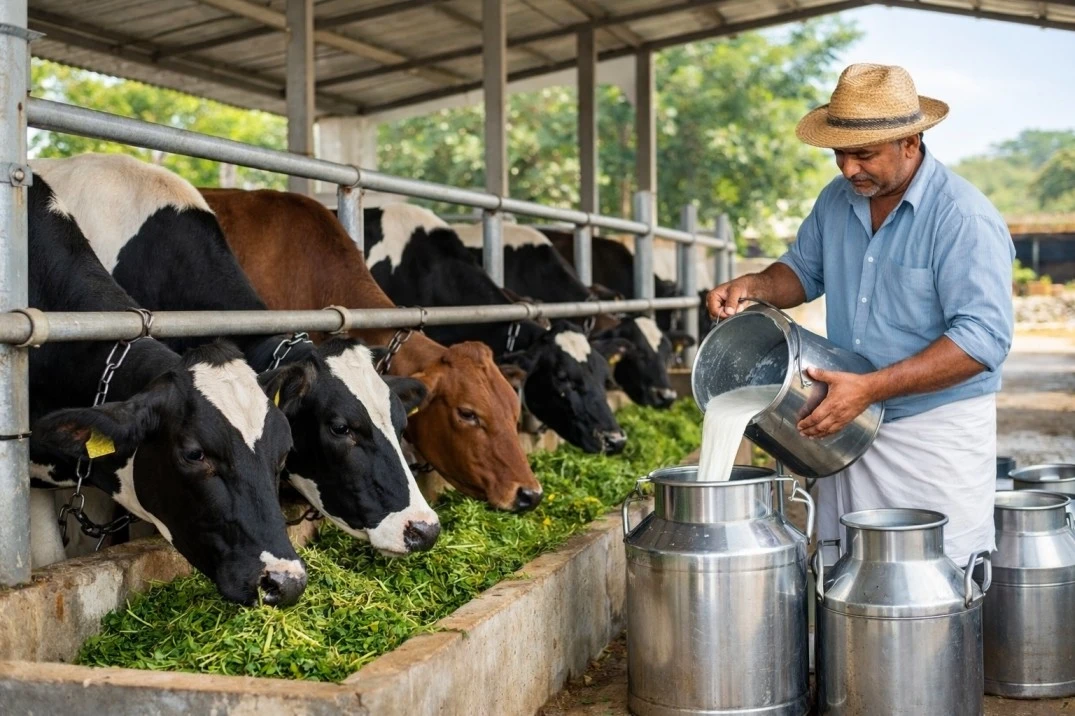
Milking should be done twice daily at fixed timings. Consistency improves milk yield.
Best Practices:
- Wash hands and udder before milking
- Use clean utensils or milking machines
- Filter and store milk immediately
- Maintain a clean milk storage area
Hygienic handling increases shelf life and customer trust, especially if selling directly to consumers.
7. Dairy Farm Investment and Profitability
The cost of starting a cow dairy farm depends on the scale of operation.
Initial Investment Includes:
- Purchase of cows
- Shed construction
- Fodder storage
- Milking equipment
- Labor cost
A small dairy farm with 5–10 cows requires moderate investment, while commercial farms with 20+ cows require higher capital.
Income Sources:
- Sale of milk
- Sale of manure
- Sale of calves
- Value-added dairy products
If managed efficiently, dairy farming can provide consistent monthly profits and long-term business growth.
8. Marketing and Sales Strategy
Marketing plays a key role in profitability.
Selling Options:
- Direct home delivery
- Tie-up with local milk vendors
- Supplying to dairy cooperatives
- Selling to hotels and sweet shops
- Branding and selling organic milk
Direct selling often gives better margins compared to selling through middlemen.
Building customer trust through quality and consistency helps in long-term business success.
9. Government Support and Subsidies
The Indian government supports dairy farmers through various schemes such as:
- Dairy Entrepreneurship Development Scheme (DEDS)
- NABARD dairy subsidies
- State-level livestock development programs
These schemes help reduce financial burden and encourage modern dairy farming practices.
10. Future of Dairy Farming
With increasing awareness about organic food and farm-fresh milk, dairy farming is evolving. Technology such as automatic milking machines, cattle monitoring systems, and scientific feeding methods are improving productivity.
Entrepreneurs who adopt modern techniques and maintain high hygiene standards can build strong dairy brands and long-term profitability.
Must Read: Cattle Farming in Bengaluru Karnataka: Benefits
Conclusion
Cow dairy farming is a stable, sustainable, and profitable agricultural business when managed with proper planning, quality cattle, balanced nutrition, and strong marketing strategies. Whether starting small or planning a large commercial unit, consistent effort and good management practices are key to success.
If you are looking to start or expand a cow dairy farm in Karnataka or Bangalore, Royal Farms provides expert guidance, quality cattle solutions, and complete dairy farm support to help you build a profitable milk production business.
Contact Royal Farms today to begin your successful dairy farming journey and turn your agricultural investment into a steady source of income.