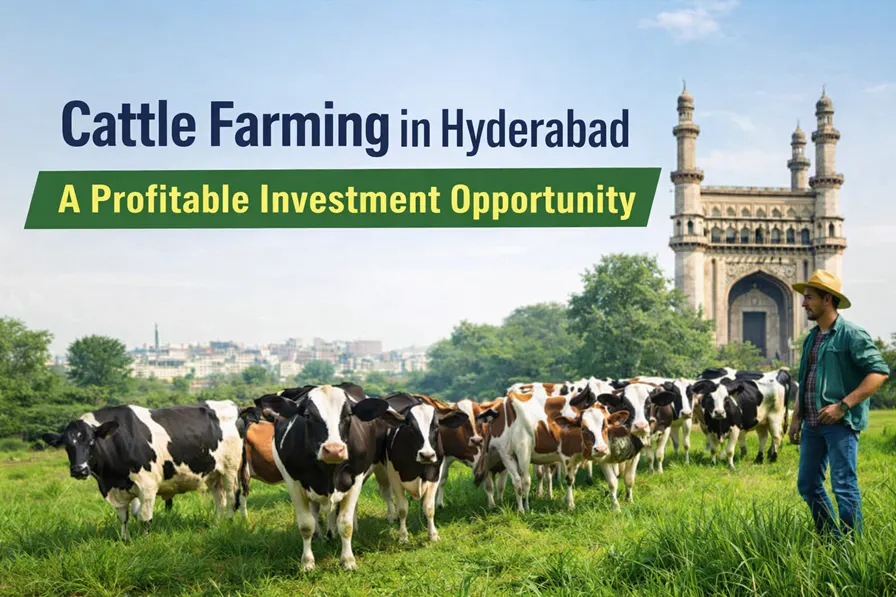
Hyderabad has rapidly emerged as one of India’s most promising regions for agribusiness, and cattle farming is at the centre of this growth. With rising demand for quality milk, organic dairy products, and ethically raised livestock, cattle farming is no longer limited to traditional farmers. Today, it has become a structured, professionally managed investment opportunity attracting working professionals, NRIs, and long-term investors. This blog explores why cattle farming in Hyderabad is profitable, how the business model works, and what makes it an attractive option for sustainable returns.
Also Read: Cattle Farming in Bengaluru Karnataka: Benefits
Growing Demand for Dairy and Livestock Products
Table of Contents
ToggleIndia is the world’s largest milk producer, and the demand continues to grow due to population increase, urbanisation, and changing dietary habits. Hyderabad, being a major metropolitan city, has a strong and consistent demand for fresh milk, ghee, curd, paneer, and other dairy products.
Urban consumers are increasingly conscious about quality, hygiene, and ethical sourcing. This shift has created a market preference for organised cattle farms that follow scientific breeding, proper nutrition, and animal welfare practices. As a result, well-managed cattle farming operations enjoy stable demand and predictable income.
Why Hyderabad Is Ideal for Cattle Farming
Several factors make Hyderabad a favourable location for cattle farming:
Climate Advantage
The region’s climate is suitable for cattle health and productivity, reducing stress-related issues and improving overall yield.
Access to Feed and Resources
Hyderabad has strong connectivity to agricultural belts, ensuring steady availability of green fodder, dry fodder, and feed supplements at competitive costs.
Excellent Connectivity
Well-developed road networks and logistics make it easy to transport milk and livestock products to nearby urban and semi-urban markets.
Skilled Workforce
Availability of trained farm workers and veterinary support ensures better farm management and animal care.
Modern Cattle Farming: Beyond Traditional Methods
Traditional cattle farming relied heavily on manual labour and informal practices. Modern cattle farming, however, is driven by data, technology, and scientific management.
Key modern practices include:
- Scientific breed selection based on productivity and adaptability
- Balanced nutrition plans customised for growth and milk yield
- Regular veterinary check-ups and vaccination schedules
- Hygienic housing and waste management systems
- Record-keeping for health, breeding, and output tracking
These practices significantly reduce risks and improve consistency in returns, making cattle farming more investor-friendly.
Investment Potential and Returns
Cattle farming offers dual income streams—regular income from milk production and long-term value from cattle growth and breeding. Unlike volatile markets, dairy demand remains steady throughout the year, providing predictable cash flow.
Key factors influencing profitability include:
- Breed quality and health management
- Feed efficiency and nutrition planning
- Scale of operations
- Professional farm management
When managed correctly, cattle farming delivers steady annual returns while preserving asset value. This makes it suitable for investors seeking low-risk, long-term opportunities with real assets.
Managed Cattle Farming: A Smart Choice for Investors
For many professionals, time and operational knowledge are major constraints. Managed cattle farming models solve this problem by offering end-to-end farm management handled by experts.
In this model:
- The investor owns the cattle
- The farm operator manages daily operations
- Profits are shared or assured based on agreed terms
This approach allows investors to benefit from agriculture without direct involvement, making it especially attractive for urban professionals and NRIs.
Sustainability and Ethical Practices
Ethical and sustainable farming is no longer optional—it is a market expectation. Responsible cattle farming focuses on animal welfare, environmental balance, and long-term productivity.
Sustainable practices include:
- Stress-free animal handling
- Natural feeding methods
- Efficient water and waste management
- Reduced dependence on harmful chemicals
These practices not only improve cattle health but also enhance brand trust and market acceptance, leading to better pricing and long-term viability.
Risk Management in Cattle Farming
Like any business, cattle farming involves risks, but professional management significantly reduces them. Common risks include disease outbreaks, feed price fluctuations, and operational inefficiencies.
Risk mitigation strategies include:
- Regular health monitoring and vaccinations
- Insurance coverage for livestock
- Diversified feed sourcing
- Experienced veterinary supervision
With proper planning, cattle farming becomes a stable and resilient investment option.
Long-Term Growth and Future Outlook
The future of cattle farming in Hyderabad looks promising due to:
- Increasing dairy consumption
- Government support for animal husbandry
- Growing preference for organised farming
- Rising interest from urban investors
As consumers continue to prioritise quality and traceability, professionally managed cattle farms are expected to outperform unorganised setups.
Final Thoughts
Cattle farming in Hyderabad is no longer just an agricultural activity—it is a structured investment opportunity with steady returns, asset security, and long-term growth potential. With rising demand, favourable regional conditions, and modern management practices, it offers a balanced blend of profitability and sustainability.
For investors looking to enter this space with confidence, partnering with an experienced and ethical farming organisation is crucial. Royal Farms provides professionally managed cattle farming solutions focused on transparency, animal welfare, and long-term value creation, making cattle farming a reliable investment choice for the future.
Read Also Blogs:
How to Start Goat Farming in India
Profitable Sheep and Goat Farming