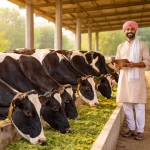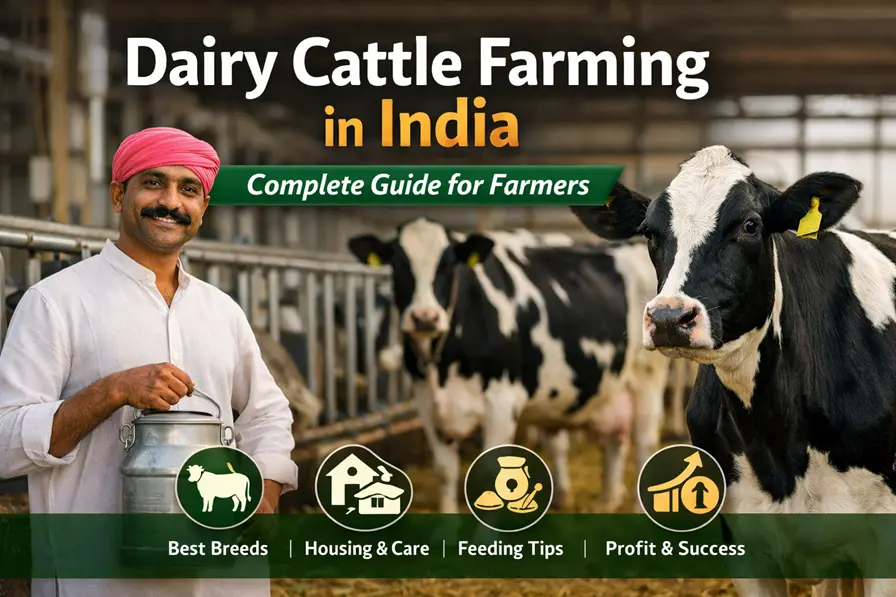
Dairy cattle farming in India is one of the oldest and most reliable agricultural practices, playing a vital role in rural livelihoods and the national economy. India is the largest milk producer in the world, and dairy farming provides steady income to millions of farmers, smallholders, and entrepreneurs. With growing demand for milk and milk products, dairy cattle farming has become a profitable and sustainable business when managed scientifically.
This complete guide explains everything farmers need to know about dairy cattle farming in India, from breeds and housing to feeding, health care, and profitability.
What Is Dairy Cattle Farming?
Table of Contents
ToggleDairy cattle farming involves the rearing and management of cattle specifically for milk production. The focus is on selecting high-yielding breeds, providing balanced nutrition, maintaining proper hygiene, and ensuring animal health to achieve consistent milk output.
In India, dairy farming is practised both at small household levels and large commercial farms, making it adaptable for farmers with different budgets and land availability.
Importance of Dairy Cattle Farming in India
Dairy cattle farming is important for several reasons:
- Provides regular income to farmers
- Generates employment in rural areas
- Supports nutrition through milk and dairy products
- Utilises agricultural by-products as cattle feed
- Contributes significantly to India’s GDP
With government schemes, subsidies, and rising urban demand, dairy cattle farming continues to grow as a stable agribusiness.
Popular Dairy Cattle Breeds in India
Choosing the right breed is the foundation of successful dairy cattle farming in India. Some popular breeds include:
Indigenous Breeds
- Gir – High milk yield and disease resistance
- Sahiwal – Known for quality milk and adaptability
- Red Sindhi – Suitable for hot climates
- Tharparkar – Dual-purpose breed with good milk output
Exotic and Crossbred Cattle
- Holstein Friesian (HF) – Very high milk yield
- Jersey – High fat content, suitable for small farms
- HF Crossbred – Popular for commercial dairy farming
Farmers should select breeds based on climate, budget, and management capacity.
Housing and Infrastructure for Dairy Cattle
Proper housing is essential for animal comfort and milk productivity. A well-designed cattle shed should:
- Be well-ventilated and spacious
- Protect cattle from heat, rain, and cold
- Have proper drainage to maintain hygiene
- Include separate areas for feeding, resting, and milking
Clean and comfortable housing reduces disease risk and improves milk yield.
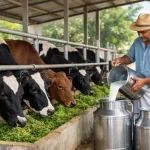
Feeding and Nutrition Management
Balanced feeding is the backbone of dairy cattle farming. Cattle require:
- Green fodder (grass, maize, berseem)
- Dry fodder (wheat straw, hay)
- Concentrates (oil cakes, grains, minerals)
- Clean drinking water at all times
Proper nutrition improves milk quantity, quality, and reproductive performance.
Health Care and Disease Management
Healthy cattle mean consistent milk production. Farmers should follow:
- Regular vaccination schedules
- Deworming and parasite control
- Clean milking practices
- Immediate treatment of sick animals
Common diseases like mastitis, foot-and-mouth disease, and brucellosis can be controlled with preventive care and veterinary support.
Milking Practices and Milk Management
Scientific milking practices ensure better milk quality and longer animal productivity:
- Milk at fixed times daily
- Maintain clean udders and equipment
- Avoid stress during milking
- Store milk in hygienic containers
Good milk handling helps farmers get better prices and builds trust with buyers.
Investment and Profitability
The cost of starting dairy cattle farming in India depends on:
- Number and breed of cattle
- Housing construction
- Feed and fodder expenses
- Veterinary and labour costs
With proper management, dairy farming can provide stable monthly income. Value-added products like curd, paneer, and ghee can further increase profits.
Challenges in Dairy Cattle Farming
Some common challenges include:
- Rising feed costs
- Disease outbreaks
- Lack of technical knowledge
- Price fluctuations
These challenges can be managed through training, expert guidance, and adopting modern farming practices.
Government Support and Schemes
The Indian government offers various schemes for dairy farmers, including:
- Subsidies on cattle purchase
- Loans under NABARD schemes
- Insurance for dairy animals
- Training and extension services
Farmers should stay informed and take advantage of these opportunities.
Conclusion
Dairy cattle farming in India is a rewarding venture for farmers who are willing to invest time, care, and proper management. With the right breed selection, scientific feeding, good housing, and healthcare practices, dairy farming can become a sustainable source of income for both small and large farmers.
At Royal Farms, we provide full support for your cattle farming journey, from expert guidance and farm planning to breed selection and best dairy practices. If you want to start or expand dairy cattle farming, Royal Farms is your trusted partner.
Contact Royal Farms today and take the next step towards successful and profitable dairy cattle farming.