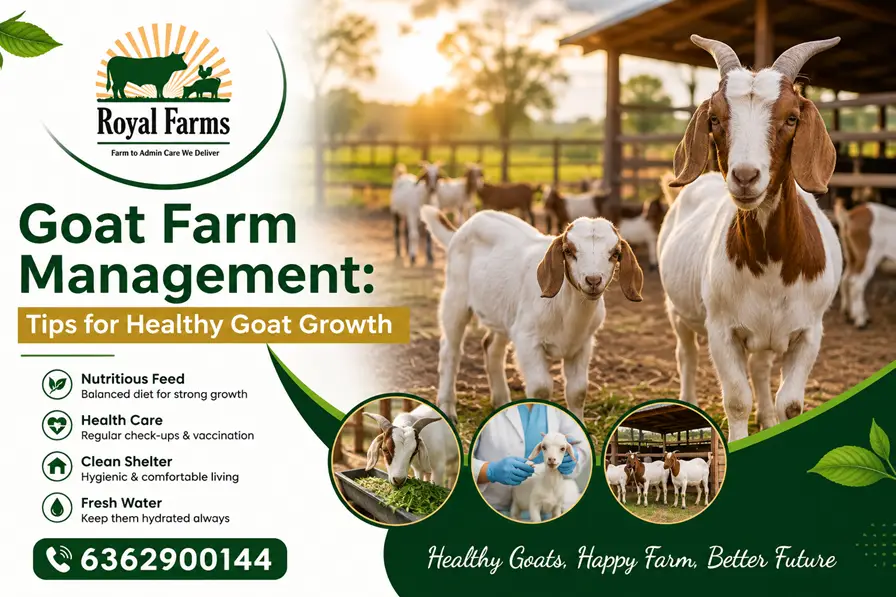
Successful goat farming depends on much more than selecting good breeds or providing daily feed. Healthy and consistent goat growth comes from a combination of proper housing, balanced nutrition, clean water, preventive healthcare, breeding management, hygiene, and regular monitoring.
As goat farming becomes increasingly organized in India, farmers are adopting more scientific management practices to improve animal health and farm efficiency. A well-managed goat farm can create a healthier environment for animals while helping farmers control unnecessary expenses and improve overall productivity.
Whether you are managing a small herd or planning a commercial goat farm, understanding the fundamentals of goat farm management is essential for long-term success.
What Is Goat Farm Management?
Table of Contents
ToggleGoat farm management refers to the systematic care and supervision of goats throughout their production cycle.
It includes:
- Housing and shed management
- Feeding and nutrition
- Clean drinking water
- Health monitoring
- Vaccination and parasite control
- Breeding management
- Kid care
- Hygiene and sanitation
- Record keeping
- Waste management
- Farm security and biosecurity
The purpose is to create the right conditions for goats to remain healthy, grow efficiently, reproduce successfully, and perform according to their production purpose.
1. Provide Clean and Comfortable Housing
A good goat shed is one of the foundations of successful goat farming.
Goats need protection from heavy rain, excessive heat, cold weather, and strong winds. At the same time, the housing area should have sufficient ventilation to prevent excessive humidity and the buildup of harmful gases.
A suitable goat shed should provide:
- Adequate space for movement
- Good ventilation
- Dry flooring
- Proper drainage
- Protection from extreme weather
- Easy access for cleaning
- Separate areas when isolation is required
Overcrowding should be avoided because it can increase stress, competition for feed and water, and the risk of disease transmission.
Keeping the shed dry and clean is particularly important. Wet and dirty areas can contribute to foot problems, parasite exposure, and other health issues.
2. Focus on Balanced Goat Nutrition
Nutrition has a direct relationship with growth, immunity, reproduction, and overall farm performance.
Goats require a balanced diet containing appropriate amounts of forage, roughage, concentrates, minerals, and water according to their age and production stage.
A practical feeding program may include:
- Green fodder
- Dry fodder
- Suitable concentrate feed
- Mineral supplements where required
- Clean drinking water
The nutritional requirements of a growing kid are different from those of a pregnant doe, breeding buck, or lactating goat. Therefore, feeding should be adjusted according to the animal’s age, body condition, reproductive stage, and production objective.
Feed should also be stored properly to prevent contamination, mold, and spoilage.
3. Make Clean Water Available Throughout the Day
Water is sometimes overlooked in livestock management, but it is essential for digestion, metabolism, temperature regulation, and overall health.
Goats should have regular access to clean and safe drinking water. During hot weather, water demand can increase, making frequent monitoring especially important.
Farmers should regularly clean water containers and prevent contamination from manure, mud, feed, or other materials.
4. Monitor Goat Growth Regularly
Healthy growth should be measured rather than assumed.
Regular monitoring can help farmers identify animals that are growing slower than expected or showing early signs of health or nutritional problems.
Useful records can include:
- Animal identification
- Age
- Body weight
- Growth rate
- Feed consumption
- Vaccination history
- Medical treatment
- Breeding information
- Kidding history
If an animal suddenly loses weight or shows reduced appetite, early investigation can help prevent a minor issue from becoming a larger farm problem.
5. Follow Preventive Health Management
Preventive healthcare is one of the most important parts of goat farm management.
Instead of waiting until goats become seriously ill, farmers should establish a routine health program with veterinary guidance.
This may include:
- Regular health checks
- Appropriate vaccinations
- Parasite-control programs
- Hoof inspection
- Observation of appetite and behaviour
- Isolation of sick animals
- Timely veterinary treatment
Diseases such as Peste des Petits Ruminants (PPR), foot-related infections, respiratory illnesses, and parasitic problems can negatively affect herd productivity. Royal Farms’ existing health guidance also emphasizes vaccination, hygiene, nutrition, and early veterinary attention as important components of goat health management.
Vaccination and treatment schedules should always be determined with a qualified veterinarian based on the animal, location, and local disease risks.
6. Give Special Attention to Young Goats
Kids require particularly careful management because their early development can influence future growth and productivity.
Important practices include:
- Ensuring adequate colostrum intake after birth
- Maintaining a clean and dry kidding area
- Monitoring feeding behaviour
- Providing appropriate nutrition
- Observing weight and growth
- Following veterinary vaccination recommendations
- Protecting young animals from extreme weather
Weakness, poor appetite, diarrhea, breathing difficulties, or abnormal behaviour should not be ignored.
Early veterinary attention can be important when a young goat shows signs of illness.
7. Maintain Proper Breeding Management
Healthy reproduction is an important part of commercial goat farming.
Breeding animals should be selected based on health, physical condition, reproductive performance, and suitable genetic characteristics.
Farmers should maintain records of:
- Breeding dates
- Buck and doe identification
- Pregnancy
- Kidding dates
- Number of kids
- Health history
- Growth performance
Avoiding repeated breeding between closely related animals is also important for maintaining healthy herd genetics.
Professional breeding management can help farmers make better decisions about herd replacement and future production.
8. Maintain Strong Farm Hygiene
Cleanliness should be part of the daily farm routine.
Regularly remove manure and wet bedding, clean feeding areas, and maintain proper drainage around the shed.
Good hygiene can help reduce environmental contamination and create a healthier living environment for goats.
Farm equipment, feeding containers, and water troughs should also be cleaned regularly.
9. Follow Basic Biosecurity Practices
Biosecurity helps reduce the chances of diseases entering or spreading within a goat farm.
Some practical measures include:
- Limiting unnecessary visitors
- Cleaning footwear and equipment where appropriate
- Isolating sick animals
- Following suitable quarantine procedures for newly introduced animals
- Avoiding unnecessary mixing of different groups
- Maintaining clean housing
Biosecurity becomes particularly important as the size of a herd increases.
10. Manage Feed Costs Without Compromising Quality
Feed is a major operating expense, so efficient feed management is essential.
However, reducing costs should not mean providing nutritionally inadequate feed.
Farmers can improve efficiency by:
- Reducing feed wastage
- Storing fodder correctly
- Planning seasonal fodder supplies
- Using locally available suitable feed resources
- Maintaining clean feeding equipment
- Adjusting rations according to animal requirements
A good feeding strategy aims to balance animal nutrition, growth performance, and operating costs.
11. Use Records to Make Better Farm Decisions
Record keeping can transform goat farming from a routine activity into a measurable business operation.
A farm record system can help answer questions such as:
Which goats are growing well?
Which animals require additional attention?
How much is the farm spending on feed and veterinary care?
What is the mortality rate?
Which animals should be retained or replaced?
Digital farm-management systems can make this process easier, but even a well-maintained manual record book can provide valuable information.
12. Manage Waste Responsibly
Goat manure is not simply farm waste. When handled appropriately, it can become a useful agricultural input.
Farmers can consider suitable manure-management methods such as:
- Composting
- Organic fertilizer production
- Integration with crop farming
- Proper manure storage
Good waste management can improve farm hygiene while supporting more sustainable agricultural practices.
Common Goat Farm Management Mistakes to Avoid
Even a well-planned goat farm can face problems if basic management practices are ignored.
Common mistakes include:
- Overcrowding the shed
- Providing poor-quality feed
- Ignoring clean drinking water
- Delaying veterinary treatment
- Skipping recommended vaccinations
- Poor parasite management
- Introducing new goats without appropriate quarantine
- Failing to maintain breeding records
- Allowing wet and unhygienic housing
- Not monitoring animal growth
- Purchasing animals without checking their health
Avoiding these mistakes can significantly improve day-to-day farm management.
How Can Farmers Improve Goat Growth?
There is no single factor responsible for healthy goat growth. It is the result of several management practices working together.
The most important areas are:
Good Genetics + Balanced Nutrition + Clean Housing + Preventive Healthcare + Proper Breeding + Regular Monitoring
If one area is neglected, it can affect the performance of the entire herd.
For example, excellent genetics cannot compensate for poor nutrition, while good nutrition may not produce the desired results if goats are living in overcrowded or unhygienic conditions.
Frequently Asked Questions
What is the most important part of goat farm management?
There is no single most important factor. Housing, nutrition, water, healthcare, breeding, hygiene, and monitoring all work together to maintain healthy goats.
How can I improve goat growth?
Provide suitable nutrition, clean water, comfortable housing, preventive healthcare, and appropriate breeding management. Regularly monitor body condition and growth so problems can be identified early.
How often should goats be checked?
Goats should be observed regularly as part of the daily farm routine. More detailed health examinations should be performed according to veterinary recommendations and the needs of the herd.
Why is record keeping important in goat farming?
Records help farmers track growth, health, breeding, treatments, and farm expenses. This information supports better management decisions and helps identify underperforming animals.
Is goat farming suitable for commercial production?
Goat farming can be developed at different scales, from small farms to commercial operations. Success depends on factors such as breed selection, feed availability, management quality, animal health, market access, and operating costs.
Conclusion
Healthy goat growth is the result of consistent and scientific farm management. From providing clean housing and balanced nutrition to maintaining preventive healthcare, breeding records, biosecurity, and regular growth monitoring, every part of the operation contributes to herd performance.
Modern goat farming is increasingly moving toward structured management, better record keeping, professional veterinary support, and efficient resource utilization. Farmers who focus on these fundamentals can build healthier herds and create a more organized and sustainable livestock operation.
For farmers and entrepreneurs looking for professional guidance in livestock farming, Royal Farms focuses on structured sheep and goat farming support, including breed selection, housing guidance, nutrition, veterinary care, breeding management, and farm-level support. Learn more about their approach and livestock farming solutions at https://royalfarms.co.in